Sabtu, 30 November 2013

East Africa Takes Step Toward Single Currency

africatodayonline.blogspot.com -

Nov. 30, 2013 11:22 a.m. ET


KAMPALA, Uganda—Heads of state in East Africa on Saturday signed a monetary-union deal, setting the clock on a 10-year timeline for the establishment of a regional single currency.


The agreement, reached at the lakeside resort of Munyonyo in Kampala, came after nearly a decade of talks. Kenya, Uganda, Tanzania and Rwanda will now try to establish institutions—including a regional central bank and a statistics body—to support the...


France to host meeting on Central African Republic

africatodayonline.blogspot.com -

An official says France will host an informal meeting on the crisis in Central African Republic next month in Paris.


Leaders of countries including Gabon, Cameroon, Congo-Brazzaville and Chad are to take part, along with Central African Republic's prime minister and U.N. Secretary-General Ban Ki-moon.


A French official who requested anonymity because she was not authorized to speak publicly on the matter said the daylong session will come at the end of a broader summit involving some 40 African leaders Dec. 6-7.


France's foreign minister has warned its former colony is "on the verge of genocide" as attacks mount between mostly Muslim fighters and Christian militias.


France hopes a U.N. resolution authorizing French troops to end massacres and restore order will pass ahead of the summit on African security issues.


Mozambique Airlines plane crashes in Namibia, killing 34

africatodayonline.blogspot.com -


WINDHOEK Sat Nov 30, 2013 11:33am EST


WINDHOEK (Reuters) - A Mozambique Airlines plane en route to Angola crashed in a game park in northeast Namibia, killing all 33 people on board, Namibian police said on Saturday.


Flight TM 470 left Maputo on Friday for the Angolan capital Luanda with 27 passengers and six crew when it lost contact with air traffic controllers, the national carrier said in a statement.


Namibian Police Force Deputy Commissioner Willy Bampton said rescue workers had found the burned-out wreckage of the aircraft in the dense bush of Bwabwata National Park, near the borders with Angola and Botswana.


"The plane has been completely burned to ashes and there are no survivors," Bampton said.


A Bwabwata game ranger at the scene said the plane's black boxes, including the voice recorder, had been located and taken by investigators.


"The bodies are scattered all over the place. It's a horrible sight," said the ranger, who identified himself only by his surname, Shinonge.


The remote, 6,100 sq km (2,300 sq mile) park is home to wildlife including elephants, lions and wild dogs.


Mozambican officials said there had been bad weather and poor visibility at the time the plane, an Embraer 190, went missing.


The flight left the Mozambican capital Maputo at 11:26 a.m. (0426 GMT) on Friday and was due to land in Luanda almost four hours later.


Namibia's aircraft investigation unit launched a helicopter search for the plane on Friday but called it off because of heavy rain, an investigator said, adding the search had resumed on Saturday.


Brazil's Embraer SA said in a statement that the plane had been delivered to Mozambique Airlines in November 2012. It said it was sending its own technicians to the crash site.


In a statement on its website, Mozambique Airlines listed the nationalities of the 27 passengers on Flight TM470 as 10 Mozambicans, nine Angolans, five Portuguese, one French, one Brazilian and one Chinese. It had earlier said there were 28 passengers on board.


(Additional reporting by Pascal Fletcher in Johannesburg, Manuel Mucari in Maputo and Brad Haynes in Sao Paulo; Writing by David Dolan; Editing by Kevin Liffey)


Police: 33 dead in Mozambican plane crash

africatodayonline.blogspot.com -

JOHANNESBURG -- A Mozambique Airlines plane carrying 33 people crashed in a remote border area, killing all on board, Namibian media reported Saturday.


The plane crashed in a Namibian national park near the border with Angola and there were no survivors, said Namibian deputy police commissioner Bollen Sankwasa, according to The Namibia Press Agency. An investigation of the cause was underway.


The plane was carrying 27 passengers, including 10 Mozambicans, nine Angolans, five Portuguese, and one citizen each from France, Brazil and China, said the airline. Six crew members were on board.


Flight TM470 from Maputo, the Mozambican capital, did not land as scheduled in Luanda, the Angolan capital, on Friday afternoon, and the airline initially said the plane might have landed in Rundu, in northern Namibia. It said it coordinated with aviation authorities in Namibia, Botswana and Angola to locate the missing plane.


A Namibian police helicopter joined officers on the ground in the search. The area is vast and there are no roads, making it difficult to locate the plane, said police official Willy Bampton, according to the Namibian Press Agency.


The search was conducted in the Bwabwata National Park in northeastern Namibia. Several thousand people as well as elephants, buffalo and other wildlife live in the park, which covers 6,100 square kilometers (2,360 square miles).


Airlines from Mozambique are among carriers banned in the European Union because of safety concerns.


Tony Tyler, director general and CEO of the International Air Transport Association, said earlier this week that none of the 25 African members of the association, which include Mozambique Airlines, had an accident in 2012.


"But the overall safety record for Africa remains a problem that we must fix," Tyler said at a meeting of the African Airlines Association in Kenya. He said African aviation comprises about 3 percent of global airline traffic, and last year it accounted for nearly half of the fatalities on Western-built jets.


Mozambique Airlines uses Boeing, Bombardier and Embraer aircraft.


CEO Marlene Mendes Manave says in a statement on the airline's website that the airline grew 8 percent in the first half of this year, compared to the same period in 2012.


Bridging the gap between rich and poor

africatodayonline.blogspot.com -

iol news pic CW_Amakhaya ngoku~

INLSA


So far, the Amakhaya Ngoku project has provided 232 two-room flats with solar-heated water to the Masiphumele fire victims of 2006, and a community hall. PICTURE: Michael Walker


A genuine commitment to sharing resources is the only sustainable answer to SA’s mounting social distress, writes Lutz van Dijk


When I first came to South Africa in May 1997 – having been denied entry during apartheid – my arrival co-incided with Archbishop Desmond Tutu’s opening of the first youth hearings of the Truth and Reconciliation Commission in Athlone.


As a staff member of the Anne Frank Foundation in Amsterdam, I remember being as fascinated, as many others were, by the ethic of the TRC in confronting South Africa’s recent and painful past. That early experience prompted me to return to conduct further research – with UWC academic Karin Chubb – about the commission’s achievements, and also its limits.


Four years later my partner and I moved to South Africa permanently to witness the transformation of society from front-row seats as volunteers in a pilot project for children living with HIV/Aids in Masiphumelele. It was here, on World Aids Day in 2002, that Archbishop Tutu, keeping his word, opened the first Hokisa Children’s Home.


You could say, in 2013, that the reflections of a historian and community activist are the last thing that’s needed as South Africans prepare for their fourth national elections and celebrate 20 years of democracy.


An economist might arguably be better placed to provide clues to dealing with the biggest challenge of all: how to create a more equal society in which the extremes of poverty and wealth are overcome and the sufficient resources of this country are shared for the benefit of all.


iol news pic cw Masiphumelele-09

Co-operation across the divisions of the past can work. Sharing means giving substantially, not just crumbs from the table, and not relying on international donations, says the writer. PICTURE: John Shaw


INLSA


The trouble is, this vision of a more equal and democratic economically strong society seems often either too abstract – like the subject of an academic report – or too remote, as in the excellent National Development Plan for 2030, implementation of the first steps of which already seems to lack urgency in government circles.


Sharing some of my experiences over the past decade as a volunteer with a historian’s background in the fields of health and housing in one of the poorest townships south of Cape Town might, however, provide some surprisingly encouraging insights.


This is especially so in a climate of growing social unrest, whether genuine or politically instigated. Marikana is without doubt the most horrifying and desperate symbol of such unrest so far. While the Farlam Commission goes on and on, we all know in our hearts that none of the underlying issues has been resolved. No historian can predict the future. But some obvious lessons from the past can be acknowledged – or ignored at society’s peril. It is by no accident that South Africa, despite the early ANC slogan, “A better life for all!” has become the world’s most unequal society.


This abstract term does not express the real pain of those millions who are still hungry and exploited – and nor does it express the fear of the wealthy (and wealth is not a matter of skin colour alone anymore) who focus more attention on the security of their property than on anything else. If even the president needs a R200 million security upgrade at his Nkandla estate while the majority of the youth face unemployment, it’s likely historians in time to come will describe this phase of South African history as the most obscene since the advent of democracy.


It is obscene in the sense of the indifference to the human dignity of others – the positive counterpart of which was once called ubuntu.


Too often, the inadequate response to this obscenity is charity, intended first and foremost to guarantee some peace of mind for those who give: to hand out food parcels and blankets after disasters or to bring toys and clothes to poor children around Christmas. Don’t get me wrong: disaster relief is still needed, sadly again and again, whenever disasters occur. But what is really needed – and what is possible – is land and decent housing in a scheme that lifts people out of poverty forever. If we provide disaster relief, let us call it exactly this, but let us not feel better about it unless we work at the same time on a mutual, respectful plan founded on sharing between those with resources and those without them – not in abstract, not in a general sense or in some distant future, but practically, today, in our immediate neighbourhood and geared towards those who are still regarded as “the others”.


Only true sharing is caring, and nothing less than genuine sharing (without taking away from anybody) is what is needed today. This is no soft version of forced redistribution, but a wake-up call while wisdom and humanity can still prevail and the spiralling risks of excessive security and growing violence have not become overwhelming.


Our modest township community offers a positive example of what is possible. In Masiphumelele, after a terrible fire in 2006 destroyed 400 shacks in one night, some residents refused the government-issue “starter kits” – a few poles, a plastic sheet and nails. They did not toyi-toyi for better housing, but got together to make plans for housing 400 families on a piece of land hardly bigger than two soccer fields. As this project was not initiated by the local ANC branch, it was met in the beginning with the deepest suspicion. Housing officials from the provincial Department of Human Settlements at the time told the affected residents there was no way to realise such plans as they would have to wait in line according to the housing waiting list. But the residents persisted. The first support came from a retired architect from the neighbouring “white” suburb of Fish Hoek.


He conceived the idea for blocks of flats, a scheme embraced by about 350 out of the 400 families. Since 2006 a few provincial housing ministers have come and gone, but it was only once the blocking of many good initiatives between the province and city was over (once the DA ruled on both levels) that the long-approved housing subsidy was made available and – together with a 50-percent stake of R20 million from private international donations – construction began.


Later, a local ANC leader also joined the beneficiary-elected board of the project, called Amakhaya Ngoku (“homes now”). So far, 232 two-room flats with solar-heated water have been given to the fire victims of 2006 – with a community hall. Flats for 120 families are still to be built, as well as a playground next to the hall.


Co-operation across the divisions of the past can work. Sharing means giving substantially, not crumbs from the table, and enables real change that arrests the perpetuation of inequality.


Hope needs visible change, but where hope is fading, populism is rife. Of course, there is no development without conflict. In our housing project we also had corruption, never around funding, but in regard to our own waiting list.


“When the government is doing it, we can too,” some would say, or “to help family and friends is an African tradition which Europeans never understand”. Some intended beneficiaries refused to move from the construction site – “Madiba promised us houses, not flats” – and some joined a rental boycott as the ownership (due to the government subsidy conditions) could only be achieved after four years of paying a modest rent of R400 a month (“I am poor and can earn more by renting it out to foreigners who pay R1 400 for the same flat”).


Each of these statements is based on the kind of populism we will see more of in the weeks ahead of the election. Populism means selecting a piece of reality (which is true) and simplifying it on emotional grounds to make yourself popular at the expense of the complete (and sometimes complex) truth.


Malema’s EFF is getting much support, especially among young people, because it appeals to their desire for visible change.


At the very least, it brings an emotional upbeat in an ocean of promises. In Masiphumelele, I meet more and more young people who “like” Juju, because he was also once poor. A rural boy raised by his gogo – and look at him now.


Of course, Malema is not “left” or even “radical”, despite his talk of nationalisation of mines and banks, but a sexist and authoritarian “commander in chief” who clearly does not think much of democracy and freedom, but may well be “ready to kill” as he offered to do once for Zuma when they were still friends.


If you read eyewitness accounts of the rise of Nazism in Germany in the early 1930s, you will find striking similarities in vocal support, especially among young people, for the new Führer.


There are other striking historical similarities: extreme poverty and hunger, overcrowded living conditions, high rates of unemployment and a young democratic government that was regarded by many as weak, if not corrupt.


How does this relate to Masiphumelele? Fifteen years ago about 15 000 people lived in the area that today houses 40 000. The community is overcrowded. There is not one square metre of unoccupied land, and about 10 000 residents have squeezed themselves into a nature reserve wetlands which is flooded every winter. This community still has only one access road, as was the norm during apartheid, which causes huge stress when emergency vehicles try to get in and out during disasters. More than half of those living under these dire circumstances are children. Despite having had an excellent high school since 2005, most of the youth are unemployed and desperately looking for jobs. Many of them will be first-time voters.


Let us not say after the next election that we didn’t know. We know in history what happens when a majority chooses to turn a blind eye to dangerous developments and divert its attention to the “good things in life”.


Of course, there are some cynics who have already prepared for the worst and, should Malema’s EFF get substantial support, are reconciled to leaving the country and going to wherever they can take their assets.


But, after living for more than a decade in this most resourceful country, I am convinced that the majority of South Africans want their country to flourish – and nobody to live in horrible poverty - yet only lack the vision, or trust, to contribute to meaningful change beyond simply voting in elections.


Again, Masiphumelele provides insights. After having survived many challenges, each of them offering crucial lessons, the Amakhaya Ngoku Housing Project is nearing the final phase with the building of the last 120 flats for the remaining fire victims still living on an open field. As in the first phase of construction, 95 percent of the private funding is coming from overseas. Rightly, most of these overseas donors wonder why South Africans with resources do not contribute substantially, but they have done so only in charity-style measures so far. Again, almost R4m has been committed from the UK and Germany, on condition that the same amount will be raised within South Africa. Impossible? Let’s see.


One particular initiative deserves applause. Some neighbours from small communities around Masiphumelele have formed a group called ubuMelwane (neighbourhood) and have met with Masi activists.


They have learned why neighbours are fiercely against any second access road and why all official “land audits” claim that vacant land is either “privately owned” or, if owned by the city, “is not feasible for housing”. It probably will never be made feasible unless enough people speak out for it.


But those who started ubuMelwane are more and more aware of the challenges and will not turn a blind eye soon again. Let’s not forget that “Ngoku” in the housing project’s name means: Now!


* Dr Van Dijk, author of A History of Africa, is the co-founder of Hokisa (Homes for Kids in South Africa, www.hokisa.co.za) and a volunteer fundraiser for the Amakhaya Ngoku housing project (www.amakhayangoku.co.za) in Masiphumelele.


** The views expressed here do not necessarily reflect those of Independent Newspapers


Weekend Argus


Sectarian tensions mount in C. African Rep. town

africatodayonline.blogspot.com -
By FLORENCE RICHARD and KRISTA LARSON

Associated Press

BOUCA, Central African Republic (AP) - About a dozen Muslim armed fighters rolled up to the Catholic mission in their pickup truck and delivered an ominous message to the hundreds seeking refuge on church grounds: Leave the premises by morning or face death.


Ismael Hadjaro, a self-proclaimed colonel in a rebel movement that overthrew Central African Republic's president earlier this year, accused the mission and its staff of harboring armed Christian combatants.


"If you are not gone by 8 o'clock tomorrow morning we will come back and shoot you and burn down the mission," he told the nun running the mission, according to a witness. "You're making this a religious war."


Frantic phone calls followed and soon soldiers from a regional peacekeeping mission showed up to guard the Catholic mission, where church officials and aid workers insist they are merely trying to protect civilians. Most of the people sheltered there are women and children, according to Lewis Mudge, a researcher with the Africa division of Human Rights Watch who witnessed the colonel's threat in Bouca last week.


France's foreign minister has warned that its former colony in central Africa is "on the verge of genocide" as attacks mount across the country's remote northwest between the mostly Muslim fighters from Seleka, who ousted the president in March, and Christian militias that have emerged to defend towns and in some cases attack Muslim civilian communities. To try to avert further violence France has pledged to send 1,000 troops to Central African Republic to help boost security before an African Union-led peacekeeping mission is fully up and running.


The situation in Bouca has been particularly dire since early September, and fresh clashes in late November prompted the threat against the Catholic mission. Forty-three bodies have been buried in recent weeks in Bouca, about 180 miles (290 kilometers) north of Bangui, the capital, according to the International Committee of the Red Cross.


Hundreds of homes in Bouca have been burned to the ground and those who haven't fled to the Catholic mission have taken shelter in the fields outside town.


"My house was looted and burned by the Seleka forces, and like many here I fled into the bush," says Nathanael Wandji, the director of the local Red Cross in Bouca. "We need to restore peace here quickly. The situation is becoming more and more dramatic."


The area around Bouca is home to a growing Christian militia movement known as the anti-balaka. The fighters - armed in some cases only with artisanal hunting rifles - rose up earlier this year in opposition to the wave of attacks by Seleka rebels. The rhetoric has taken on an increasingly sectarian tone in a town where Christians and Muslims had lived together in relative peace for generations.


The ex-Seleka forces want to restore order in Bouca and they know that not all Christians support the militias, said Mahadji Maamate, a spokesman for the rebel leader who threatened the church.


"The anti-balaka fighters are against Muslims and they don't want Muslims living among them," Maamate told The Associated Press during a recent visit to Bouca. "They have killed poor Muslims and burned their children."


Outside Bouca, the anti-balaka adorn themselves with talismans - or gris-gris - to give them spiritual protection from the enemy's bullets. Their weapons are mostly primitive artisanal hunting rifles, though some cart AK-47s stolen from dead Seleka fighters and others have weapons that appear to come from the national army.


Many are motivated by vengeance and say their relatives have been killed by Seleka forces.


"The rebels killed my parents and my wife - now it's my turn to kill them," said one anti-balaka fighter brandishing a weapon and who refused to give his name.


The violence first ignited in Bouca on Sept. 9, when Christian militia fighters attacked a Muslim neighborhood, setting homes ablaze. Reprisal attacks were soon launched by the Seleka rebels and among the victims was a humanitarian worker accused of collaborating with the anti-balaka, according to Amnesty International. It is believed to be the single deadliest day of violence confirmed in the northwest since the conflict began, with 115 Christians and 38 Muslims killed in the fighting, Mudge said.


Even as the community maintains an uneasy peace, people are still dying from malaria and other diseases because of a lack of access to health care.


"The fighting in Bouca is indicative of how horrific violence is engulfing the Central African Republic," said Sylvain Groulx, head of mission for Medecins Sans Frontieres, or Doctors Without Borders, in Central African Republic. "We are extremely concerned about the living conditions of the displaced, who are overcrowded in churches, mosques or schools, or living in the bush with no access to health care, food or water. Much more needs to be done and it needs to be done now."


___


Larson reported from Dakar, Senegal.


Krista Larson: https://twitter.com/klarsonafrica


Copyright 2013 The Associated Press. All rights reserved. This material may not be published, broadcast, rewritten or redistributed.


Namibia police: 33 dead in Mozambican plane crash

africatodayonline.blogspot.com -

Reset your password


Enter your email and we will send you a link to reset your password.


You must have browser cookies enabled to view our site.


Close
It's possible that your browser cookies are turned off. Read our FAQ page to find out how to enable cookies in your browser.


Account issue


We're sorry, your shared access privileges have been removed by the subscriber. You can still look at a limited number of articles per month.


Subscribe now


Account issue


We're sorry, this account no longer has full access. You can still look at a limited number of articles per month.


S.Africans call online for Zuma's ouster after report on spending

africatodayonline.blogspot.com -

JOHANNESBURG - Thousands of South Africans on Saturday called online for the impeachment of President Jacob Zuma, after a newspaper revealed a government document detailing the use of public funds for lavish upgrades to his private home.


The Mail and Guardian weekly said on Friday a provisional report by South Africa's top anti-corruption watchdog found Zuma had derived "substantial" personal gain from a $21 million "security upgrade" to his home, including a swimming pool and a cattle enclosure.


The leaked document by the Public Protector Thuli Madonsela, entitled "Opulence on a Grand Scale", recommended that Zuma repay some of the public funds from the improvements to his compound at Nkandla in the hills of KwaZulu-Natal province.


The report of Madonsela's investigation sparked outrage on social media, with prominent campaigner Zackie Achmat setting up an online petition calling for Zuma's ouster that had garnered 8,200 supporters a little over 24 hours after the news broke.


The report will likely bolster a perception of widespread corruption under Zuma and could hurt him and his ruling African National Congress (ANC) in an election due in six months.


"Millions of public money used to benefit the president's private home whilst millions of our people do not have access to basic services such as water, electricity (and) decent schooling," wrote one petitioner, Yoliswa Dwane.


"This is corruption. It spits in the face of the poor and all people of this country."


South Africa's press also weighed in, with the Citizen newspaper splashing the headline "Impeach Zuma" on its front page.


Zuma's spokesman has declined to comment, while Madonsela's office has said the leak was "unethical and unlawful". The ANC has said it believes Zuma has done nothing wrong.


The Mail and Guardian said the improvements included a visitors' lounge, amphitheatre, cattle enclosure and swimming pool - referred to in documents as a "fire pool" on the grounds that it could double up as a water reservoir for firefighting.


The newspaper said Madonsela's report accused Zuma, a polygamous Zulu traditionalist whose five years in office have been littered with scandals over violating ethics codes by failing to protect state resources and misleading parliament.


Zuma told parliament last year all the buildings in the sprawling compound had been built "by ourselves as family and not by the government".


Reuters


Sectarian tensions mount in C. African Rep. town

africatodayonline.blogspot.com -

BOUCA, Central African Republic (AP) — About a dozen Muslim armed fighters rolled up to the Catholic mission in their pickup truck and delivered an ominous message to the hundreds seeking refuge on church grounds: Leave the premises by morning or face death.


Ismael Hadjaro, a self-proclaimed colonel in a rebel movement that overthrew Central African Republic's president earlier this year, accused the mission and its staff of harboring armed Christian combatants.


"If you are not gone by 8 o'clock tomorrow morning we will come back and shoot you and burn down the mission," he told the nun running the mission, according to a witness. "You're making this a religious war."


Frantic phone calls followed and soon soldiers from a regional peacekeeping mission showed up to guard the Catholic mission, where church officials and aid workers insist they are merely trying to protect civilians. Most of the people sheltered there are women and children, according to Lewis Mudge, a researcher with the Africa division of Human Rights Watch who witnessed the colonel's threat in Bouca last week.


France's foreign minister has warned that its former colony in central Africa is "on the verge of genocide" as attacks mount across the country's remote northwest between the mostly Muslim fighters from Seleka, who ousted the president in March, and Christian militias that have emerged to defend towns and in some cases attack Muslim civilian communities. To try to avert further violence France has pledged to send 1,000 troops to Central African Republic to help boost security before an African Union-led peacekeeping mission is fully up and running.


The situation in Bouca has been particularly dire since early September, and fresh clashes in late November prompted the threat against the Catholic mission. Forty-three bodies have been buried in recent weeks in Bouca, about 180 miles (290 kilometers) north of Bangui, the capital, according to the International Committee of the Red Cross.


Hundreds of homes in Bouca have been burned to the ground and those who haven't fled to the Catholic mission have taken shelter in the fields outside town.


"My house was looted and burned by the Seleka forces, and like many here I fled into the bush," says Nathanael Wandji, the director of the local Red Cross in Bouca. "We need to restore peace here quickly. The situation is becoming more and more dramatic."


The area around Bouca is home to a growing Christian militia movement known as the anti-balaka. The fighters — armed in some cases only with artisanal hunting rifles — rose up earlier this year in opposition to the wave of attacks by Seleka rebels. The rhetoric has taken on an increasingly sectarian tone in a town where Christians and Muslims had lived together in relative peace for generations.


The ex-Seleka forces want to restore order in Bouca and they know that not all Christians support the militias, said Mahadji Maamate, a spokesman for the rebel leader who threatened the church.


"The anti-balaka fighters are against Muslims and they don't want Muslims living among them," Maamate told The Associated Press during a recent visit to Bouca. "They have killed poor Muslims and burned their children."


Outside Bouca, the anti-balaka adorn themselves with talismans — or gris-gris — to give them spiritual protection from the enemy's bullets. Their weapons are mostly primitive artisanal hunting rifles, though some cart AK-47s stolen from dead Seleka fighters and others have weapons that appear to come from the national army.


Many are motivated by vengeance and say their relatives have been killed by Seleka forces.


"The rebels killed my parents and my wife — now it's my turn to kill them," said one anti-balaka fighter brandishing a weapon and who refused to give his name.


The violence first ignited in Bouca on Sept. 9, when Christian militia fighters attacked a Muslim neighborhood, setting homes ablaze. Reprisal attacks were soon launched by the Seleka rebels and among the victims was a humanitarian worker accused of collaborating with the anti-balaka, according to Amnesty International. It is believed to be the single deadliest day of violence confirmed in the northwest since the conflict began, with 115 Christians and 38 Muslims killed in the fighting, Mudge said.


Even as the community maintains an uneasy peace, people are still dying from malaria and other diseases because of a lack of access to health care.


"The fighting in Bouca is indicative of how horrific violence is engulfing the Central African Republic," said Sylvain Groulx, head of mission for Medecins Sans Frontieres, or Doctors Without Borders, in Central African Republic. "We are extremely concerned about the living conditions of the displaced, who are overcrowded in churches, mosques or schools, or living in the bush with no access to health care, food or water. Much more needs to be done and it needs to be done now."


___


Larson reported from Dakar, Senegal.


Krista Larson: https://twitter.com/klarsonafrica


Diamonds are a best friend's ashes

africatodayonline.blogspot.com -

iol news pic dead people diamonds ss GEM Blue

Johannesburg - Diamonds - and death - are forever. And if you’ve got the money, like one local woman who forked out $10 000 (R106 000) to have the remains of her beloved pug turned into a 0.6 carat blue diamond, you can immortalise your companion for eternity.


South African families, devastated by the loss of an adored pet, are increasingly turning to companies like Envirocin, a pet crematorium and memorial park, to enquire about transforming their loved one’s remains into a diamond ring as a “lasting memory that endures just as a diamond does”.


The company, in Kya Sands, sends the ashes of pets - and even human remains - to Chicago where LifeGem, whose tagline is “ashes to diamond”, takes a minimum of six months to create a diamond ring, molecularly identical to natural diamonds, out of them.


The carbon from the cremated remains - or a lock of hair for those choosing burials - is converted to graphite during a purification process, subjected to high pressure and temperatures of between 1 600°C and 2 000°C.


The graphite is placed into a diamond press that mimics the high force needed to create the gems naturally.


Globally, 5 000 people have turned their pets and human companions into diamond rings, according to LifeGem. But for many South Africans, it’s too expensive. It costs $2 699 (R27 000) to turn remains into a 0.2 carat yellow gem and up to $24 999 for a 1.50 carat green one.


iol news pic dead people diamonds ss GEM Yellow

“On the human side, we’re finding people in SA who are building it into their wills to say they want their own cremated remains turned into a LifeGem and want to pay for the cost of the manufacture from their insurance payout,” explains Dean Webb, a founder of Envirocin.


“But, potentially, an heir would say it’s not in their interest to turn the deceased into a diamond and want the cash rather…


“I think the trend of pet cremation has always been big for pet lovers,” Webb adds. “A lot of families request LifeGem for their pets, there are a lot of enquiries, but there are not many takers, because it is expensive. People here opt for something more affordable.


“It’s totally bizarre but when you speak to people, they are, like, ‘Ja, flip, I don’t know what to do with my ashes or those of my pet or loved one.’


“People move cities and countries and don’t want to leave their loved ones behind in the garden and the diamonds are easy to travel with.


“I think if it was not as expensive, a lot more people would do it because it’s a memorial jewel after death.”


Saturday Star


Namibia police: 33 dead in Mozambican plane crash

africatodayonline.blogspot.com -

Reset your password


Enter your email and we will send you a link to reset your password.


You must have browser cookies enabled to view our site.


Close
It's possible that your browser cookies are turned off. Read our FAQ page to find out how to enable cookies in your browser.


Account issue


We're sorry, your shared access privileges have been removed by the subscriber. You can still look at a limited number of articles per month.


Subscribe now


Account issue


We're sorry, this account no longer has full access. You can still look at a limited number of articles per month.


Raglan turkey farmer honoured by Queen

africatodayonline.blogspot.com -

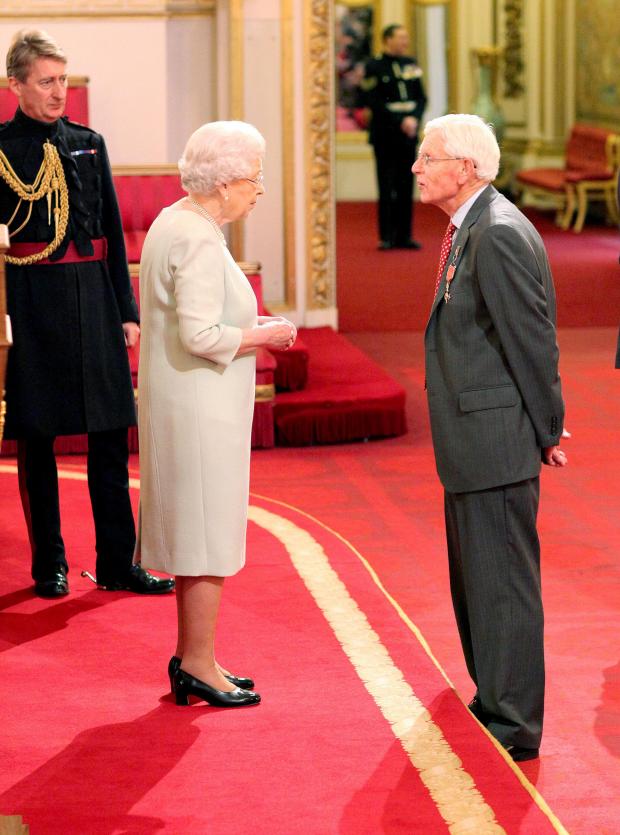
Raglan turkey farmer honoured by Queen for work in Ethiopia


AWARD: Alexander Holt-Wilson of Raglan receives his honour from Queen Elizabeth at Buckingham Palace. Photo: Dominic LipinskiAWARD: Alexander Holt-Wilson of Raglan receives his honour from Queen Elizabeth at Buckingham Palace. Photo: Dominic Lipinski


A TURKEY farmer from Raglan was made an OBE by the Queen at Buckingham Palace yesterday.


Alexander ‘Sandy’ Holt-Wilson, 77, a former eye surgeon, was honoured by Queen Elizabeth for helping raise the standard of eye care in Gonder, northern Ethiopia. During his time in Ethiopia he helped set up Gondar Ethiopa Eye Sight (GEES) with the aid of a charity and also built a new eye hospital.


Dr Holt-Wilson and his family have run an organic turkey farm near Raglan for the last 25 years and rear around 450 turkeys a year.


Hear them roar: Couple hope film stirs action on lions

africatodayonline.blogspot.com -

DUBA PLAINS, Botswana â?? After years making documentary films to educate the West about the need to preserve African wildlife, Beverly and Dereck Joubert are turning their sights on a new target.


The South African couple's 22 previous films have raised awareness throughout much of the world about the dwindling numbers of lions and other "big cats" in their natural habitats.


Now they believe they need to broaden their audience to include China.


Leaning over the dashboard of their custom-modified Land Cruiser, Dereck 57, keeps a watchful eye on the six lions in the grass a few feet in front of him.


"We've made a mess of Africa's wildlife population. Colonialism brought trophy hunting and today we're losing five lions a day to poaching and hunting," he says.


Their work has focused on the steady decline of big cats across the globe. The most recent documentary premiers Dec. 1 at 10 p.m. ET/PT on the cable channel NatGeo Wild.Game of Lions tells the story of a group of young males and the dangers they face as they seek to become the one battle-scarred warrior who will lead the pride. It's part of NatGeo's popular Big Cat Week.


The Jouberts have been National Geographic Explorers-in-Residence since 1999. They worry that a rising hunger in China for lion bone wine and exotic animal pelts is adding to the dangers faced by lions.


Africa's lion population is already down to 20,000 to 30,000, from as many as a million originally, says Luke Hunter, president of Panthera, a global wild cat conservation organization based in New York.


The main current threat is simply more mouths to feed, Hunter said. Africa has the fastest-growing population on the planet, fueling the need to clear more land for farming, destroying the habitat lions need to survive.


But other dangers loom. For centuries tiger bone wine, made by soaking tiger bones in spirits, has been sold in China and across Asia as an elixir believed to have healing powers and as a male potency enhancer.


Today "lion bones have started to replace tiger bones because tigers are being driven to extinction in the wild," says Richard Carroll with the World Wildlife Fund's Africa program.


"It's all bogus," Dereck says. "It doesn't do anything except get lions killed."


The bones come mainly from South African lion farms, where the animals are bred to be hunted, said Tico McNutt, director of the Botswana Predator Conservation Trust in Maun, Botswana.


The concern is that bones from wild lions are beginning to enter China and Chinese markets in Asia. "Once you have any legal trade, it opens up a whole illegal trade," Carroll says.


The Jouberts say they aren't singling out China. "There's no one reason why we're losing the animals in Africa, there are many reasons. We can't target one culture," says Beverly, 56.


At the same time, having spent the last 32 years working to change perceptions abut wildlife, they feel the need to reach beyond their current audience. "Our long Western documentaries don't work in China," where young people prefer short videos on cellphones, Beverly says.


The couple have signed on with a Hong Kong film production group to find cultural intermediaries who can help them translate their award-winning stories into a message that will resonate with the world's most populous nation - while not forgetting their American and European audiences.


Their stories about individual animals "stir emotions and fertilize empathy in ways that science and scientific understanding" cannot, McNutt said.


They certainly look the part to tell those stories. Meeting the Jouberts on a tiny airstrip in Botswana feels like stepping into a Ralph Lauren safari ad. They're all bronzed skin, khaki clothes and savanna hats. Except that they are the real thing - having lived in the African bush since 1977.


"We both felt we'd been born into the wrong era," Beverly says. When Dereck finished his mandatory military service they left Johannesburg to spend a year at a wildlife observation post in South Africa. "We wanted to be explorers. It was almost like a gap year," she said, comparing it to the year between high school and college many Europeans take to travel.


"Except it was a gap of 30 years," Dereck adds.


That search for "the real Africa" turned the newly married couple into first researchers, then documentary filmmakers and now conservationists who have the ear of many powerful politicians in southern Africa.


They spend a year or two on each movie, practically living in their SUV. They come to know the animals whose lives they record intimately, spending months around them until they become just another part of the landscape to wildlife.


"Sometimes we just climb up on the roof and sleep there so we don't lose them at dawn," Beverly says.


The one they've just finished, Game of Lions, focuses on males. While male and females cubs are born in equal numbers, by adulthood only one in seven males survives, Dereck says.


Of the cubs they began to follow, only a pair of brothers are still with the pride. "It's those two over there," he says, pointing to them sleeping under a bush in the midday heat.


The film features harrowing moments. One shows the struggles of a tiny male cub being toyed with by a group of adults while his mother is away hunting.


"We don't interfere," says Beverly of the heartbreaking scene. "It's hard, but we can't. They're wild animals, it's nature's way."


But they can, and do, interfere in the dangers humans pose to lions. They are a powerful force for conservation not only through their movies but also politically in Africa, said Rudi van Aarde, chair of conservation ecology at the University of Pretoria in South Africa.


"That's because they come across not as activists, but as Africans," van Aarde said. Both are now Botswanan citizens


China's growing middle class is their next objective.


Lion bone wine and other wildlife items "are illegal and rare and desired so they're being consumed as status symbols," Panthera's Hunter said.


However, "really good educational campaigns in China can change things," says Carroll. In recent years, shark fin soup has begun to fall out of favor as Chinese celebrities such as actor Jackie Chan and basketball player Yao Ming speak out against the traditional Chinese delicacy. Conservationists decry it because as many as 10 million sharks a year are slaughtered annually just for their fins.


Stopping the market in lion parts in Asia before it really gets going is an important part of protecting them from the numerous threats they face today and in the future, Beverly says.


It's a smart move, Hunter says. "If they're able to bring that expertise to bear and move the needle even a small amount, it's helpful."


Copyright 2013 USATODAY.com


Read the original story: Hear them roar: Couple hope film stirs action on lions


Mozambique Airlines plane crashes in Namibia, killing 34

africatodayonline.blogspot.com -


A Mozambique Airlines plane en route to Angola crashed in a game park in northeast Namibia killing all 34 people on board, Namibian police said on Saturday.

Flight TM 470 left Maputo on Friday for the Angolan capital of Luanda with 28 passengers and six crew members on board when it lost contact with air traffic controllers, the national carrier said in a statement.

Namibian Police Force Deputy Commissioner Willy Bampton said rescue workers had found burned-out wreckage of the aircraft in the dense bush of Bwabwata National Park, near the borders with Angola and Botswana.

"The plane has been completely burned to ashes and there are no survivors," Bampton said.

A Bwabwata game ranger at the scene said the plane's black boxes, including the voice recorder, had been located and taken by investigators.

"The bodies are scattered all over the place. It's a horrible sight," said the ranger, who identified himself only by his surname, Shinonge.

Namibia's aircraft investigation unit launched a helicopter search for the plane on Friday but called it off because of heavy rain, an investigator said, adding the search had resumed on Saturday.

The remote, 6,100 sq km (2,300 sq mile) park is home to wildlife including elephants, lions and wild dogs.

Mozambican officials said the plane, an Embraer SA 190, went missing on Friday in bad weather and poor visibility.

In a statement on its website, Mozambique Airlines listed the nationalities of the passengers on Flight TM470 as 10 Mozambicans, nine Angolans, 5 Portuguese, one French, one Brazilian and one Chinese.

The flight left the Mozambican capital of Maputo at 1126 (0426 ET) on Friday and had been due to arrive in Luanda at 1400.


Namibia police: 33 dead in Mozambican plane crash

africatodayonline.blogspot.com -
By CHRISTOPHER TORCHIA

Associated Press

JOHANNESBURG (AP) - A Mozambique Airlines plane carrying 33 people crashed in a remote border area, killing all on board, Namibian media reported Saturday.


The plane crashed in a Namibian national park near the border with Angola and there were no survivors, said Namibian deputy police commissioner Bollen Sankwasa, according to The Namibia Press Agency. An investigation of the cause was underway.


The plane was carrying 27 passengers, including 10 Mozambicans, nine Angolans, five Portuguese, and one citizen each from France, Brazil and China, said the airline. Six crew members were on board.


Flight TM470 from Maputo, the Mozambican capital, did not land as scheduled in Luanda, the Angolan capital, on Friday afternoon, and the airline initially said the plane might have landed in Rundu, in northern Namibia. It said it coordinated with aviation authorities in Namibia, Botswana and Angola to locate the missing plane.


A Namibian police helicopter joined officers on the ground in the search. The area is vast and there are no roads, making it difficult to locate the plane, said police official Willy Bampton, according to the Namibian Press Agency.


The search was conducted in the Bwabwata National Park in northeastern Namibia. Several thousand people as well as elephants, buffalo and other wildlife live in the park, which covers 6,100 square kilometers (2,360 square miles).


Airlines from Mozambique are among carriers banned in the European Union because of safety concerns.


Tony Tyler, director general and CEO of the International Air Transport Association, said earlier this week that none of the 25 African members of the association, which include Mozambique Airlines, had an accident in 2012.


"But the overall safety record for Africa remains a problem that we must fix," Tyler said at a meeting of the African Airlines Association in Kenya. He said African aviation comprises about 3 percent of global airline traffic, and last year it accounted for nearly half of the fatalities on Western-built jets.


Mozambique Airlines uses Boeing, Bombardier and Embraer aircraft.


CEO Marlene Mendes Manave says in a statement on the airline's website that the airline grew 8 percent in the first half of this year, compared to the same period in 2012.


Copyright 2013 The Associated Press. All rights reserved. This material may not be published, broadcast, rewritten or redistributed.


Hear them roar: Couple hope film stirs action on lions

africatodayonline.blogspot.com -

Reset your password


Enter your email and we will send you a link to reset your password.


You must have browser cookies enabled to view our site.


Close
It's possible that your browser cookies are turned off. Read our FAQ page to find out how to enable cookies in your browser.


Account issue


We're sorry, your shared access privileges have been removed by the subscriber. You can still look at a limited number of articles per month.


Subscribe now


Account issue


We're sorry, this account no longer has full access. You can still look at a limited number of articles per month.


Namibia police: 33 dead in Mozambican plane crash

africatodayonline.blogspot.com -

JOHANNESBURG (AP) — A Mozambique Airlines plane carrying 33 people crashed in a remote border area, killing all on board, Namibian media reported Saturday.


The plane crashed in a Namibian national park near the border with Angola and there were no survivors, said Namibian deputy police commissioner Bollen Sankwasa, according to The Namibia Press Agency. An investigation of the cause was underway.


The plane was carrying 27 passengers, including 10 Mozambicans, nine Angolans, five Portuguese, and one citizen each from France, Brazil and China, said the airline. Six crew members were on board.


Flight TM470 from Maputo, the Mozambican capital, did not land as scheduled in Luanda, the Angolan capital, on Friday afternoon, and the airline initially said the plane might have landed in Rundu, in northern Namibia. It said it coordinated with aviation authorities in Namibia, Botswana and Angola to locate the missing plane.


A Namibian police helicopter joined officers on the ground in the search. The area is vast and there are no roads, making it difficult to locate the plane, said police official Willy Bampton, according to the Namibian Press Agency.


The search was conducted in the Bwabwata National Park in northeastern Namibia. Several thousand people as well as elephants, buffalo and other wildlife live in the park, which covers 6,100 square kilometers (2,360 square miles).


Airlines from Mozambique are among carriers banned in the European Union because of safety concerns.


Tony Tyler, director general and CEO of the International Air Transport Association, said earlier this week that none of the 25 African members of the association, which include Mozambique Airlines, had an accident in 2012.


"But the overall safety record for Africa remains a problem that we must fix," Tyler said at a meeting of the African Airlines Association in Kenya. He said African aviation comprises about 3 percent of global airline traffic, and last year it accounted for nearly half of the fatalities on Western-built jets.


Mozambique Airlines uses Boeing, Bombardier and Embraer aircraft.


CEO Marlene Mendes Manave says in a statement on the airline's website that the airline grew 8 percent in the first half of this year, compared to the same period in 2012.


Mozambique Plane Crash Kills All 33 Onboard

africatodayonline.blogspot.com -
Police say the crash of a Mozambique Airlines plane in a remote border area of Namibia has killed all 33 people onboard.

The flight from Mozambique's capital, Maputo, with 27 passengers and six crew members was due to land in the Angolan capital, Luanda, Friday afternoon, but never arrived.


After the plane was reported missing, a lengthy search led to the discovery of the burned out wreckage Saturday in the dense bush of the vast Bwabwata National Park, located near the border of Angola and Botswana.


There is no immediate word on what may have caused the aircraft to crash.


Authorities say the dead include 10 Mozambicans, nine Angolans, five Portuguese, and one each French, Brazilian and Chinese nationals. The nationalities of the other six, which may have been the crew, have not been publicly identified.


Why Britain Should Have Invaded Zimbabwe

africatodayonline.blogspot.com -


The Associated Press


Robert Mugabe has long claimed that Britain wanted to overthrow him, using this to smear his political opponents as Western stooges and shore up support for his kleptocratic regime in Zimbabwe. He has warned over the years of looming invasion, of hit squads sent to kill key aides and gunboats despatched from London. These claims have been dismissed mostly as the paranoid ravings of a deluded despot. But now they have been given force by Thabo Mbeki, the former South African President, who claims that Tony Blair suggested their two nations invade Zimbabwe to topple Mugabe.


TAGGED: UK, Robert Mugabe, Zimbabwe


SA actress assaulted in Botswana

africatodayonline.blogspot.com -

iol news pic Rosie Motene

INLSA


Rosie Motene is best known for her role as Tsego in the SABC1 television soap Generations.


fla


SA-BOTSWANA-ACTRESS


JOHANNESBURG Nov 30 Sapa


SA ACTRESS ASSAULTED IN BOTSWANA


South African actress Rosie Motene has allegedly been assaulted in Botswana, the International Relations Department said on Saturday.


"I called the South African embassy in Gaborone and two officials from the embassy went to assist her," said spokesman Clayson Monyela.


Monyela said he was alerted to the incident when Motene asked for help on her Twitter page on Saturday morning.


She tweeted: "I need assistance from SA, I was beaten in Botswana and currently in Bokamo hospital, police wont come and I need assistance! No Joke."


Motene played the role of a journalist in the soapie Generations.


Monyela said embassy officials had met with doctors in Botswana


who said she was strong enough to travel back to South Africa.


"A family member will meet her at the airport and she will receive medical attention in South Africa," said Monyela.


It was unknown why she was in Botswana.


Sapa


/ge/mar 11/30/13 14-13


A voice against rape injustice

africatodayonline.blogspot.com -

Nov. 30, 2013, 11:24 p.m.


SINCE telling her story of being raped at knife-point in Kenya, Hobart-based woman Philippa Strickland has been overwhelmed with support, both in Tasmania and overseas.


The 31-year-old, who was attacked on the island of Lamu in September, wants to raise greater awareness of how such crimes are treated in Africa.


``When I first returned from Kenya, a few days after the incident, I was just so relieved to be home - I wanted to put it all out of my mind,'' Miss Strickland said.


However, a few weeks later she read about the gang rape of a Kenyan schoolgirl and how the offenders were caught and made to cut grass around the police station as punishment.


``I was horrified at the response in this girl's case,'' she said. ``I started to think whether the police really saw anything wrong with what these men had done.


``Then quite soon after I heard about another rape on Lamu and the reaction of the local people who seem to be aware that unless they become vigilantes perhaps no justice would be served. Then I wanted to make people aware of what was going on.''


Miss Strickland had just left a restaurant when her attacker grabbed her and put a knife to her throat. She came to under a wooden boat with the balaclava-clad man on top of her.


``We take it for granted in Australia that if a crime is committed, usually the justice system will run its course and the offender, if found, will be prosecuted,'' she said.


``But in much of Africa this is not always the case, and too often, especially for women, they have no voice to speak out or they are too scared to.


``While the article focuses on what happened to me, perhaps we need to be shocked by the events affecting somebody we can relate to before the bigger picture of what is happening in other parts of the world can be understood.''


Miss Strickland was treated in hospital and given a course of antiretroviral drugs to lessen the risk of contracting HIV. She has a follow-up HIV test tomorrow , which she said coincided quite well with World Aids Day today.


``I was quite diligent with the antiretrovirals following the incident. I feel quite confident I will have a negative result.


``It has been almost three months now and I feel very strong about everything that has happened. There have been moments when I have been home alone where I have felt uneasy, and one moment in a unisex public toilet where I had a little panic attack hearing somebody else come in, but I think these are just tests that I have to deal with.''


Miss Strickland plans to return to Kenya and Lamu, in time.


``I have visited Africa three times and have an intense love for the continent. There is a spirit there that is infectious, and nothing could stop me from wanting to go back.''