Minggu, 30 November 2014

Correction: Ebola-Omaha Patient-Memorial story

africatodayonline.blogspot.com -

LANDOVER HILLS, Md. (AP) - In a story Nov. 29 about the funeral of a doctor who died of Ebola, The Associated Press reported erroneously the age of Dr. Martin Salia's younger son, Hinwaii. He is 12 years old, not 14.


A corrected version of the story is below:


Doctor who died of Ebola hailed as hero


Doctor who died of Ebola remembered at funeral as national hero in Sierra Leone


By BEN NUCKOLS


Associated Press


LANDOVER HILLS, Md. (AP) - Dr. Martin Salia didn't get into the medical profession to get rich, and even though he was a permanent U.S. resident, he chose to work in his native Sierra Leone because the need for surgeons there was so great.


Although his medical colleagues were worried when he returned there to treat Ebola patients, they said the decision was consistent with his character.


The 44-year-old surgeon was remembered Saturday at his funeral Mass as a tireless, selfless and heroic advocate for medical care for the less fortunate. Salia died of Ebola on Nov. 17 after being flown to a hospital in Omaha, Nebraska, in the advanced stages of the deadly virus. He became the second person to die in the United States after contracting Ebola in West Africa, where it has killed nearly 7,000 people.


Ron Klain, the White House Ebola response coordinator, read a personal note of condolence from President Barack Obama to Salia's family.


"The greatest heroes are people who choose to face danger, who voluntarily put themselves at risk to help others," Klain said. "Martin Salia was such a man."


The 90-minute Mass at the home parish of Salia's family in Maryland drew a crowd that swelled to the hundreds. Relatives, friends, colleagues and dignitaries from both the U.S. and Sierra Leone were in attendance, along with Sierra Leonean immigrants from around the country, some of whom said they didn't know Salia personally.


Salia's wife, Isatu Salia, wept as she carried a small black box containing her husband's cremated remains into the church, flanked by the couple's sons, 20-year-old Maada and 12-year-old Hinwaii.


Bockari Stevens, the Sierra Leonean ambassador to the United States, called Salia a national hero who abandoned "the luxuries of the United States" to aid his homeland.


"It is a loss not only to your family. It is a loss to our country," Stevens said.


Stevens called for the United States to do more to "ensure that this scourge is blighted" in Sierra Leone, which is now bearing the brunt of the 8-month-old outbreak, and the other West African nations stricken by Ebola. Klain pledged that more aid was on the way.


"The world's response has been too late, but now, help is coming," he said to applause.


The top United Nations official in the fight against the disease said Saturday in an interview with The Associated Press that Sierra Leone will soon see a dramatic increase in Ebola treatment beds, but it's not clear who will staff them. Only about a quarter of a promised 1,200 treatment beds are up and running. The nation is also dogged by unsafe burials, which may account for up to 50 percent of all new cases, said Anthony Banbury, head of the U.N. Mission for Ebola Emergency Response.


Salia was born and raised in Kenema, Sierra Leone, and received his medical training in Freetown, the country's capital. He later served as a surgical resident in Cameroon and also worked in Kenya and the United States. His dream had been to open his own hospital in Sierra Leone, colleagues said.


Salia did not receive aggressive treatment for Ebola until nearly two weeks after he first started showing symptoms. His formal diagnosis was delayed, and it took several days for him to be flown back to the United States. Those delays, doctors said, probably made it impossible for anyone to save his life.


Dr. Marilee Cole, an international health consultant who ran a Georgetown University training program in Cameroon, remembered Salia as an unusually humble physician. The diminutive, wiry surgeon was always in motion, she said, and despite his work ethic, he managed to organize a soccer league for the hospital staff. After he completed his residency and began training other doctors, they were awed by his multitude of skills, she said.


"You never knew how hard he was working until you talked to your colleagues," Cole said. "Over the course of many years, I came to understand there was something special about him."


In a brief interview after the Mass, Salia's older son said he was heartened by the esteem in which others held his father.


"I'm really proud that he was able to do so many things for a lot of people," Maada Salia said.


___


Associated Press writer Sarah DiLorenzo in Dakar, Senegal, contributed to this report.


___


Follow Ben Nuckols on Twitter at http://ift.tt/13qvZwN.


Copyright 2014 The Associated Press. All rights reserved. This material may not be published, broadcast, rewritten or redistributed.


Correction: Ebola-Omaha Patient-Memorial story

africatodayonline.blogspot.com -

LANDOVER HILLS, Md. (AP) - In a story Nov. 29 about the funeral of a doctor who died of Ebola, The Associated Press reported erroneously the age of Dr. Martin Salia's younger son, Hinwaii. He is 12 years old, not 14.


A corrected version of the story is below:


Doctor who died of Ebola hailed as hero


Doctor who died of Ebola remembered at funeral as national hero in Sierra Leone


By BEN NUCKOLS


Associated Press


LANDOVER HILLS, Md. (AP) - Dr. Martin Salia didn't get into the medical profession to get rich, and even though he was a permanent U.S. resident, he chose to work in his native Sierra Leone because the need for surgeons there was so great.


Although his medical colleagues were worried when he returned there to treat Ebola patients, they said the decision was consistent with his character.


The 44-year-old surgeon was remembered Saturday at his funeral Mass as a tireless, selfless and heroic advocate for medical care for the less fortunate. Salia died of Ebola on Nov. 17 after being flown to a hospital in Omaha, Nebraska, in the advanced stages of the deadly virus. He became the second person to die in the United States after contracting Ebola in West Africa, where it has killed nearly 7,000 people.


Ron Klain, the White House Ebola response coordinator, read a personal note of condolence from President Barack Obama to Salia's family.


"The greatest heroes are people who choose to face danger, who voluntarily put themselves at risk to help others," Klain said. "Martin Salia was such a man."


The 90-minute Mass at the home parish of Salia's family in Maryland drew a crowd that swelled to the hundreds. Relatives, friends, colleagues and dignitaries from both the U.S. and Sierra Leone were in attendance, along with Sierra Leonean immigrants from around the country, some of whom said they didn't know Salia personally.


Salia's wife, Isatu Salia, wept as she carried a small black box containing her husband's cremated remains into the church, flanked by the couple's sons, 20-year-old Maada and 12-year-old Hinwaii.


Bockari Stevens, the Sierra Leonean ambassador to the United States, called Salia a national hero who abandoned "the luxuries of the United States" to aid his homeland.


"It is a loss not only to your family. It is a loss to our country," Stevens said.


Stevens called for the United States to do more to "ensure that this scourge is blighted" in Sierra Leone, which is now bearing the brunt of the 8-month-old outbreak, and the other West African nations stricken by Ebola. Klain pledged that more aid was on the way.


"The world's response has been too late, but now, help is coming," he said to applause.


The top United Nations official in the fight against the disease said Saturday in an interview with The Associated Press that Sierra Leone will soon see a dramatic increase in Ebola treatment beds, but it's not clear who will staff them. Only about a quarter of a promised 1,200 treatment beds are up and running. The nation is also dogged by unsafe burials, which may account for up to 50 percent of all new cases, said Anthony Banbury, head of the U.N. Mission for Ebola Emergency Response.


Salia was born and raised in Kenema, Sierra Leone, and received his medical training in Freetown, the country's capital. He later served as a surgical resident in Cameroon and also worked in Kenya and the United States. His dream had been to open his own hospital in Sierra Leone, colleagues said.


Salia did not receive aggressive treatment for Ebola until nearly two weeks after he first started showing symptoms. His formal diagnosis was delayed, and it took several days for him to be flown back to the United States. Those delays, doctors said, probably made it impossible for anyone to save his life.


Dr. Marilee Cole, an international health consultant who ran a Georgetown University training program in Cameroon, remembered Salia as an unusually humble physician. The diminutive, wiry surgeon was always in motion, she said, and despite his work ethic, he managed to organize a soccer league for the hospital staff. After he completed his residency and began training other doctors, they were awed by his multitude of skills, she said.


"You never knew how hard he was working until you talked to your colleagues," Cole said. "Over the course of many years, I came to understand there was something special about him."


In a brief interview after the Mass, Salia's older son said he was heartened by the esteem in which others held his father.


"I'm really proud that he was able to do so many things for a lot of people," Maada Salia said.


___


Associated Press writer Sarah DiLorenzo in Dakar, Senegal, contributed to this report.


___


Follow Ben Nuckols on Twitter at http://ift.tt/13qvZwN.


Copyright 2014 The Associated Press. All rights reserved. This material may not be published, broadcast, rewritten or redistributed.


Seasoned Ethiopian Captain Establishes Private Airline, Pilot School

africatodayonline.blogspot.com -

Addis Ababa, 01 December 2014 (WIC) - Former captain of Ethiopian Airlines, Mulatu Lemlemayehu, owner of Dreamliner Hotel, is establishing a new private airline and pilot training school, East African Aviation, with an outlay of 57 million birr.


Captian Mulat is a seasoned pilot who served Ethiopian Airlines for 39 years and has accumulated 27,000 flight hours under his belt. While working for the national flag carrier he commanded aircraft from the old DC3 to the state-of-the-art jetliner, Dreamliner.


Mulat founded an investment company called M.T.D.N and built Dreamliner Hotel in Addis Ababa near Meskel Flower eight years ago. He started talking about the new business venture with his former colleagues a year ago. He retired from Ethiopian Airlines last August.


M.T.D.N owns the new private airline, East African Aviation, and the pilot training school. Captain Lemma Tekalign, general manager of East African Aviation, told The Reporter that the company was undertaking a feasibility study and working on paperwork for the last one year. Lemma said that the company submitted application to the Ethiopian Civil Aviation Authority (ECAA). "They evaluated our application swiftly and approved the documents. To give us the Air Operator Certificate (AOC) and license for the pilot training school they are waiting for the arrival of the aircraft that we bought," Captain Lemma said.


East African Aviation will provide charter flight services. It will provide VIP flights and flight services for international organizations, tourists, construction and mining companies. It will offer flight services for aerial survey and mapping work. The new private airline will also offer medical evacuation (air ambulance services).

There will also be an aero club where individuals who want to fly for leisure will be enrolled as members and fly for a few hours during their leisure time.


According to the GM, East African Aviation recently bought three aircraft. For the airline operation the company both King Air 200 aircraft at a cost of two million dollars from a US-based company. The aircraft is expected to arrive at Bole International Airport after one month. East African Aviation is planning to offer an air ambulance service. "We are contemplating to bring Eurocopter and Cessna Citation aircraft that are fully equipped with oxygen and all other emergency medical equipment."


East African Aviation bought two trainer aircraft, Cessna172, from a Sweden-based company, Air Unlimited, for EUR 380,000. The Cessna aircraft are now in Antwerp, Belgium, undergoing some modification work. Lemma expects to receive them after four weeks. "We hope to be operational in January tentatively. Once we receive the aircraft ECAA will issue us the necessary licenses," he said.


The company also bought two flight simulators for the pilot training school at a cost of 390,000 dollars. The company bought one Cessna and one King Air simulator from a US-based company, Redbird Flight International. The flight simulators are on their way to Djibouti Port.


The pilot training school has dormitories and a canteen which can accommodate 24 cadets at a time. The school has auditoriums, briefing rooms and a library. Theoretical part of the training will be given in the premise of the school while the flight lesson will be offered at the Bole International Airport.


The school will offer Private Pilot License (PPL) and Commercial Pilot License (CPL). It will take a cadet four month to complete a PPL training program. The CPL training takes 14 months. The tuition fee for PPL is USD 23,000 while the CPL training costs USD 66,500. "These costs include accommodation, meals, uniforms and other expenses. There is no hidden cost here," Captain Lemma said.


"We will not make money out of the school. We just want to offer an internationally recognized service in Ethiopia. It could be profitable after seven or eight years. The tuition might seem expensive for those who are not in the aviation industry. Fuel cost is cumbersome," he said.


According to Lemma, the trainer aircraft are equipped with a state-of-the-art flight instrument. "We want to make it a five star flight school."


Lemma is a veteran Ethiopian Air Force pilot and former director of the Ethiopian Airlines pilot training school. The headquarters of East African Aviation and pilot training school is located in front of the Ethiopian Airlines Aviation Academy off the ring road. The school has already hired four instructors and hopes to admit 24 cadets. (The Reporter)


Ethiopia's hope lies in its wonderful people - Monday, 01 December 2014 06:24

africatodayonline.blogspot.com -

Addis Ababa, 01 December 2014 (WIC) - Mark Twain had once, on coming back to New York, made this famous observation: “It’s not quite what it used to be and it appears decidedly better than when I was here last.”

In true Twain honesty, he had wondered whether his going away had something to do with this progress as well.


I went to Addis Ababa last week after a gap of two years. I got reminded of Twain for understandable reasons. The airport was still an unholy mess. Large, rustic, disorganised and derelict. Yet, it was attempting to become the future aviation hub of the region and Africa.

And Ethiopian Airlines does fancy itself. Its branding makes people believe in its service and promises. A bit like the rest of the country really. It is, after all, Sub-Saharan Africa’s largest country in numbers after Nigeria.


A history rich in culture and having a fairly unique status in Africa of never having been officially a colony does have its perks. By a sheer bit of diplomatic guile, it is also the host to the African Union HQ and hence, a natural destination for all African diplomatic efforts.


Ethiopia has etched itself as an African leader, a beacon of hope and a paragon of virtue. Yet, it’s essentially a fiefdom still; both at a political level and at a business level.


The key sectors remain in the hands of the government or are restricted (example banking) with stringent local ownership rules. But this is a proud country with proud people, albeit with a rather horrible legacy of famine and an even more horrible legacy of deposing its own monarch and then being ruled by the junta and its ‘red terror’ for many decades. So why do people love Ethiopia? (Forbes India)


Correction: Ebola-Omaha Patient-Memorial story

africatodayonline.blogspot.com -

LANDOVER HILLS, Md. (AP) - In a story Nov. 29 about the funeral of a doctor who died of Ebola, The Associated Press reported erroneously the age of Dr. Martin Salia's younger son, Hinwaii. He is 12 years old, not 14.


A corrected version of the story is below:


Doctor who died of Ebola hailed as hero


Doctor who died of Ebola remembered at funeral as national hero in Sierra Leone


By BEN NUCKOLS


Associated Press


LANDOVER HILLS, Md. (AP) - Dr. Martin Salia didn't get into the medical profession to get rich, and even though he was a permanent U.S. resident, he chose to work in his native Sierra Leone because the need for surgeons there was so great.


Although his medical colleagues were worried when he returned there to treat Ebola patients, they said the decision was consistent with his character.


The 44-year-old surgeon was remembered Saturday at his funeral Mass as a tireless, selfless and heroic advocate for medical care for the less fortunate. Salia died of Ebola on Nov. 17 after being flown to a hospital in Omaha, Nebraska, in the advanced stages of the deadly virus. He became the second person to die in the United States after contracting Ebola in West Africa, where it has killed nearly 7,000 people.


Ron Klain, the White House Ebola response coordinator, read a personal note of condolence from President Barack Obama to Salia's family.


"The greatest heroes are people who choose to face danger, who voluntarily put themselves at risk to help others," Klain said. "Martin Salia was such a man."


The 90-minute Mass at the home parish of Salia's family in Maryland drew a crowd that swelled to the hundreds. Relatives, friends, colleagues and dignitaries from both the U.S. and Sierra Leone were in attendance, along with Sierra Leonean immigrants from around the country, some of whom said they didn't know Salia personally.


Salia's wife, Isatu Salia, wept as she carried a small black box containing her husband's cremated remains into the church, flanked by the couple's sons, 20-year-old Maada and 12-year-old Hinwaii.


Bockari Stevens, the Sierra Leonean ambassador to the United States, called Salia a national hero who abandoned "the luxuries of the United States" to aid his homeland.


"It is a loss not only to your family. It is a loss to our country," Stevens said.


Stevens called for the United States to do more to "ensure that this scourge is blighted" in Sierra Leone, which is now bearing the brunt of the 8-month-old outbreak, and the other West African nations stricken by Ebola. Klain pledged that more aid was on the way.


"The world's response has been too late, but now, help is coming," he said to applause.


The top United Nations official in the fight against the disease said Saturday in an interview with The Associated Press that Sierra Leone will soon see a dramatic increase in Ebola treatment beds, but it's not clear who will staff them. Only about a quarter of a promised 1,200 treatment beds are up and running. The nation is also dogged by unsafe burials, which may account for up to 50 percent of all new cases, said Anthony Banbury, head of the U.N. Mission for Ebola Emergency Response.


Salia was born and raised in Kenema, Sierra Leone, and received his medical training in Freetown, the country's capital. He later served as a surgical resident in Cameroon and also worked in Kenya and the United States. His dream had been to open his own hospital in Sierra Leone, colleagues said.


Salia did not receive aggressive treatment for Ebola until nearly two weeks after he first started showing symptoms. His formal diagnosis was delayed, and it took several days for him to be flown back to the United States. Those delays, doctors said, probably made it impossible for anyone to save his life.


Dr. Marilee Cole, an international health consultant who ran a Georgetown University training program in Cameroon, remembered Salia as an unusually humble physician. The diminutive, wiry surgeon was always in motion, she said, and despite his work ethic, he managed to organize a soccer league for the hospital staff. After he completed his residency and began training other doctors, they were awed by his multitude of skills, she said.


"You never knew how hard he was working until you talked to your colleagues," Cole said. "Over the course of many years, I came to understand there was something special about him."


In a brief interview after the Mass, Salia's older son said he was heartened by the esteem in which others held his father.


"I'm really proud that he was able to do so many things for a lot of people," Maada Salia said.


___


Associated Press writer Sarah DiLorenzo in Dakar, Senegal, contributed to this report.


___


Follow Ben Nuckols on Twitter at http://ift.tt/13qvZwN.


Copyright 2014 The Associated Press. All rights reserved. This material may not be published, broadcast, rewritten or redistributed.


Correction: Ebola-Omaha Patient-Memorial story

africatodayonline.blogspot.com -

LANDOVER HILLS, Md. (AP) - In a story Nov. 29 about the funeral of a doctor who died of Ebola, The Associated Press reported erroneously the age of Dr. Martin Salia's younger son, Hinwaii. He is 12 years old, not 14.


A corrected version of the story is below:


Doctor who died of Ebola hailed as hero


Doctor who died of Ebola remembered at funeral as national hero in Sierra Leone


By BEN NUCKOLS


Associated Press


LANDOVER HILLS, Md. (AP) - Dr. Martin Salia didn't get into the medical profession to get rich, and even though he was a permanent U.S. resident, he chose to work in his native Sierra Leone because the need for surgeons there was so great.


Although his medical colleagues were worried when he returned there to treat Ebola patients, they said the decision was consistent with his character.


The 44-year-old surgeon was remembered Saturday at his funeral Mass as a tireless, selfless and heroic advocate for medical care for the less fortunate. Salia died of Ebola on Nov. 17 after being flown to a hospital in Omaha, Nebraska, in the advanced stages of the deadly virus. He became the second person to die in the United States after contracting Ebola in West Africa, where it has killed nearly 7,000 people.


Ron Klain, the White House Ebola response coordinator, read a personal note of condolence from President Barack Obama to Salia's family.


"The greatest heroes are people who choose to face danger, who voluntarily put themselves at risk to help others," Klain said. "Martin Salia was such a man."


The 90-minute Mass at the home parish of Salia's family in Maryland drew a crowd that swelled to the hundreds. Relatives, friends, colleagues and dignitaries from both the U.S. and Sierra Leone were in attendance, along with Sierra Leonean immigrants from around the country, some of whom said they didn't know Salia personally.


Salia's wife, Isatu Salia, wept as she carried a small black box containing her husband's cremated remains into the church, flanked by the couple's sons, 20-year-old Maada and 12-year-old Hinwaii.


Bockari Stevens, the Sierra Leonean ambassador to the United States, called Salia a national hero who abandoned "the luxuries of the United States" to aid his homeland.


"It is a loss not only to your family. It is a loss to our country," Stevens said.


Stevens called for the United States to do more to "ensure that this scourge is blighted" in Sierra Leone, which is now bearing the brunt of the 8-month-old outbreak, and the other West African nations stricken by Ebola. Klain pledged that more aid was on the way.


"The world's response has been too late, but now, help is coming," he said to applause.


The top United Nations official in the fight against the disease said Saturday in an interview with The Associated Press that Sierra Leone will soon see a dramatic increase in Ebola treatment beds, but it's not clear who will staff them. Only about a quarter of a promised 1,200 treatment beds are up and running. The nation is also dogged by unsafe burials, which may account for up to 50 percent of all new cases, said Anthony Banbury, head of the U.N. Mission for Ebola Emergency Response.


Salia was born and raised in Kenema, Sierra Leone, and received his medical training in Freetown, the country's capital. He later served as a surgical resident in Cameroon and also worked in Kenya and the United States. His dream had been to open his own hospital in Sierra Leone, colleagues said.


Salia did not receive aggressive treatment for Ebola until nearly two weeks after he first started showing symptoms. His formal diagnosis was delayed, and it took several days for him to be flown back to the United States. Those delays, doctors said, probably made it impossible for anyone to save his life.


Dr. Marilee Cole, an international health consultant who ran a Georgetown University training program in Cameroon, remembered Salia as an unusually humble physician. The diminutive, wiry surgeon was always in motion, she said, and despite his work ethic, he managed to organize a soccer league for the hospital staff. After he completed his residency and began training other doctors, they were awed by his multitude of skills, she said.


"You never knew how hard he was working until you talked to your colleagues," Cole said. "Over the course of many years, I came to understand there was something special about him."


In a brief interview after the Mass, Salia's older son said he was heartened by the esteem in which others held his father.


"I'm really proud that he was able to do so many things for a lot of people," Maada Salia said.


___


Associated Press writer Sarah DiLorenzo in Dakar, Senegal, contributed to this report.


___


Follow Ben Nuckols on Twitter at http://ift.tt/13qvZwN.


Copyright 2014 The Associated Press. All rights reserved. This material may not be published, broadcast, rewritten or redistributed.


Egypt: Prosecutors to appeal after Mubarak verdict

africatodayonline.blogspot.com -


  • A judge dropped charges against Mubarak in the deaths of hundreds of protesters

  • He was previously convicted and sentenced to life in prison, but appealed

  • "Our children's blood isn't cheap," the mother of one of the slain protesters says

  • Mubarak is still serving a three-year sentence for embezzlement


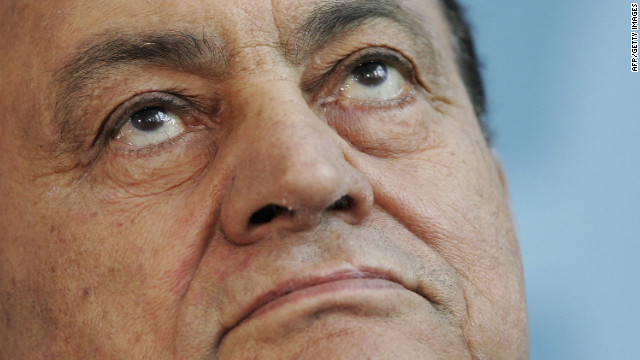
Cairo (CNN) -- Egyptian prosecutors say they will appeal after former ruler Hosni Mubarak was cleared of charges linking him to the deaths of hundreds of protesters during the country's 2011 uprising.


The ruling was a stunning reversal for the ex-president who had been convicted of ordering the killings of peaceful protesters and was sentenced to life in prison for the same charges two years ago.


On Saturday, a Cairo judge dismissed charges linking Mubarak to the deaths of protesters during the 2011 revolt that led to the end of his 29-year rule. The judge also found him not guilty of corruption.


The 86-year-old was stoic as his supporters in the courtroom cheered the decision that capped a months-long retrial. Reclining on a hospital gurney in a defendants' cage, he nodded while fellow defendants kissed him on the head.
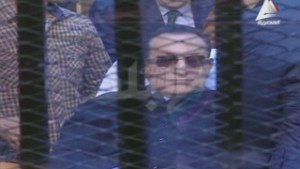


Egyptian ex-president vindicated


Former Egyptian President Hosni Mubarak has been held since he stepped down during the country's uprising in 2011. He was convicted in 2012 on charges of inciting violence against protesters and was sentenced to life in prison. But Mubarak appealed, and a retrial was granted.Former Egyptian President Hosni Mubarak has been held since he stepped down during the country's uprising in 2011. He was convicted in 2012 on charges of inciting violence against protesters and was sentenced to life in prison. But Mubarak appealed, and a retrial was granted.
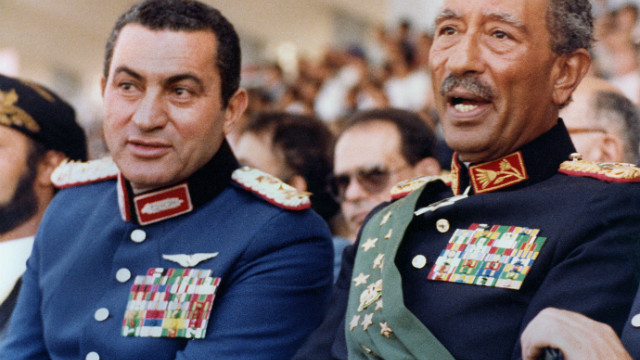


Then-Vice President Mubarak, left, joins President Anwar Sadat at a military parade on October 6, 1981, the day Islamic fundamentalists from within the army assassinated Sadat. Mubarak succeeded Sadat as Egypt's president, maintaining power for nearly three decades.Then-Vice President Mubarak, left, joins President Anwar Sadat at a military parade on October 6, 1981, the day Islamic fundamentalists from within the army assassinated Sadat. Mubarak succeeded Sadat as Egypt's president, maintaining power for nearly three decades.
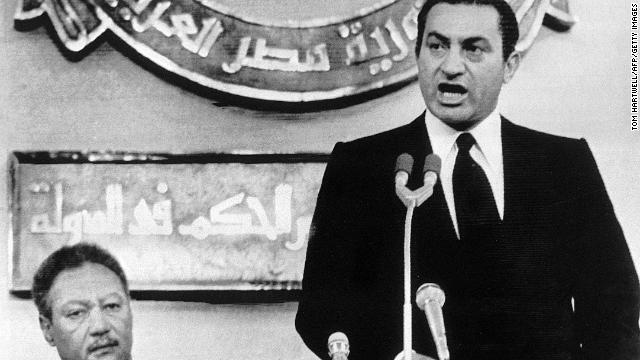


Eight days after Sadat's assassination, Mubarak is officially sworn in as Egypt's president on October 14, 1981. Mubarak was re-elected in 1987, 1993, 1999 and 2005.Eight days after Sadat's assassination, Mubarak is officially sworn in as Egypt's president on October 14, 1981. Mubarak was re-elected in 1987, 1993, 1999 and 2005.
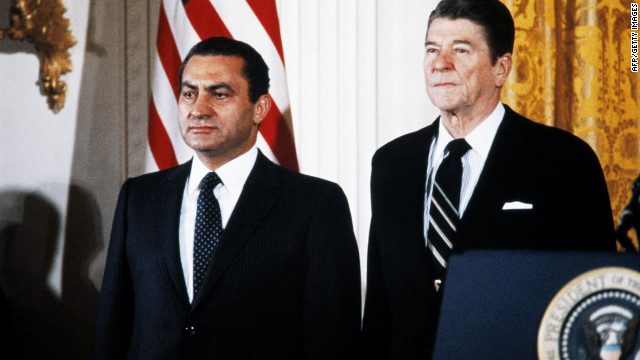


Mubarak poses with U.S. President Ronald Reagan at the White House in 1982. Mubarak poses with U.S. President Ronald Reagan at the White House in 1982.
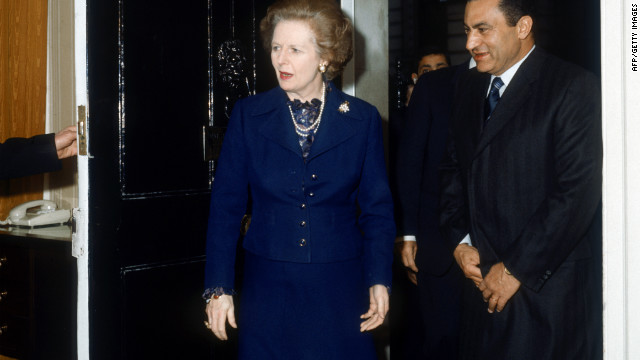


British Prime Minister Margaret Thatcher meets with Mubarak in London in 1985. British Prime Minister Margaret Thatcher meets with Mubarak in London in 1985.
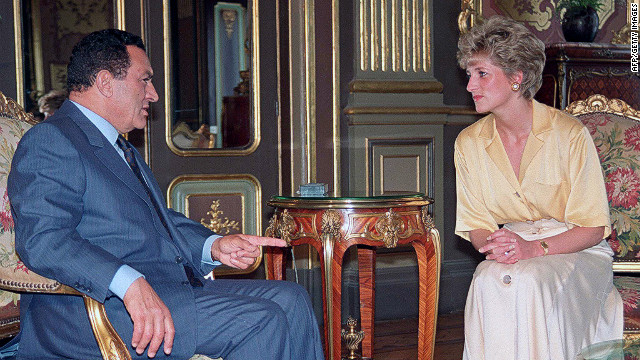


Diana, Princess of Wales, visits Mubarak during a trip to Egypt in 1992.Diana, Princess of Wales, visits Mubarak during a trip to Egypt in 1992.
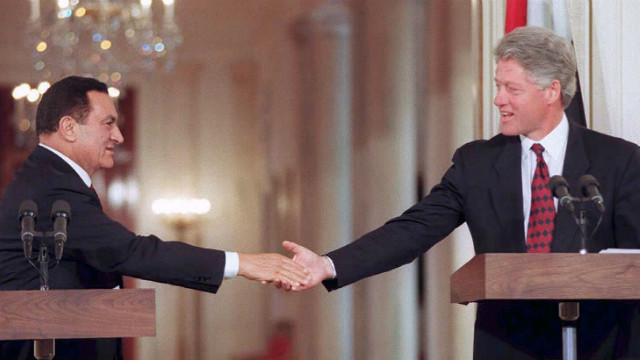


Mubarak and U.S. President Bill Clinton hold a joint press conference in 1995.Mubarak and U.S. President Bill Clinton hold a joint press conference in 1995.
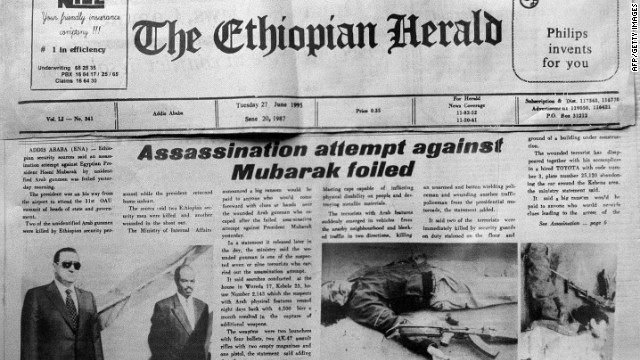


The front page of the Ethiopian Herald reports a foiled assassination attempt on Mubarak on June 27, 1995. He survived an attempt by an al Qaeda-affiliated group in Addis Ababa, Ethiopia.The front page of the Ethiopian Herald reports a foiled assassination attempt on Mubarak on June 27, 1995. He survived an attempt by an al Qaeda-affiliated group in Addis Ababa, Ethiopia.
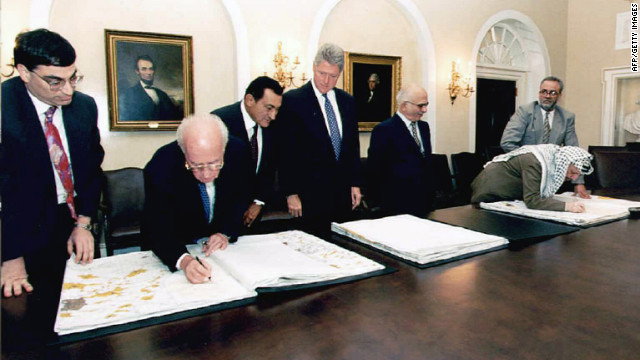


Mubarak, third from left, joins President Bill Clinton, Israeli Prime Minister Yitzhak Rabin, second from left, Jordan's King Hussein, third from right, and Palestinian leader Yasser Arafat, second from right, in Washington in 1995. The Israeli leader and Arafat signed maps representing the redeployment of Israeli troops in the West Bank.Mubarak, third from left, joins President Bill Clinton, Israeli Prime Minister Yitzhak Rabin, second from left, Jordan's King Hussein, third from right, and Palestinian leader Yasser Arafat, second from right, in Washington in 1995. The Israeli leader and Arafat signed maps representing the redeployment of Israeli troops in the West Bank.
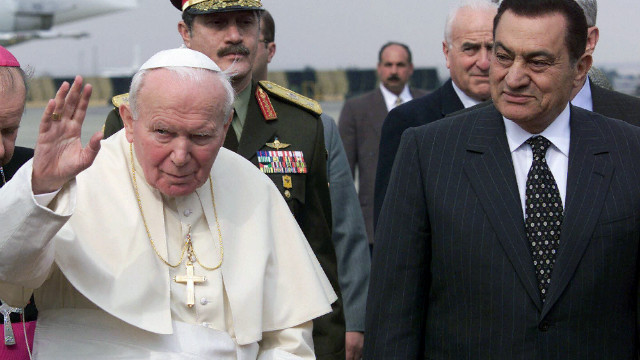


Mubarak welcomes Pope John Paul II to Egypt for a three-day visit in 2000.Mubarak welcomes Pope John Paul II to Egypt for a three-day visit in 2000.
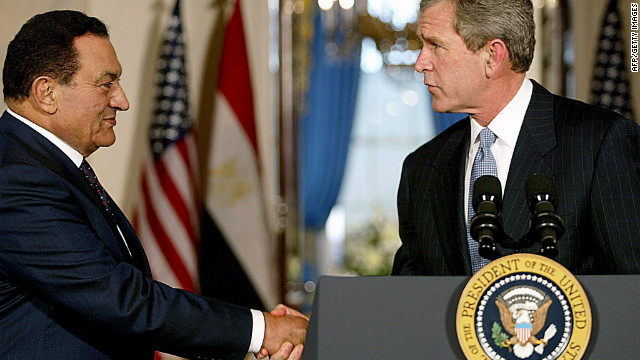


U.S. President George W. Bush greets Mubarak at the White House in 2002 to talk about the Middle East crisis and the war in Afghanistan.U.S. President George W. Bush greets Mubarak at the White House in 2002 to talk about the Middle East crisis and the war in Afghanistan.
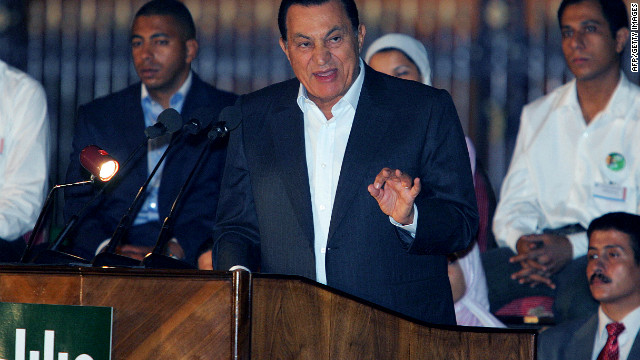


In 2005, Mubarak again runs for a six-year term in the country's first multiparty presidential election. He was declared the official winner with about 88% of the vote, but many considered the election to be a sham.In 2005, Mubarak again runs for a six-year term in the country's first multiparty presidential election. He was declared the official winner with about 88% of the vote, but many considered the election to be a sham.
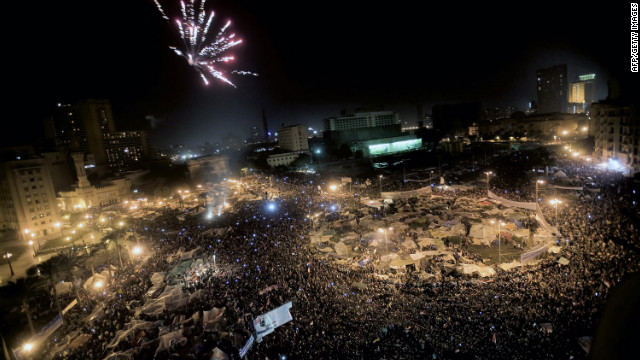


After weeks of Egyptians protesting Mubarak's 29-year reign, the president steps down from office on February 11, 2011, causing celebrations in Cairo's Tahrir Square.After weeks of Egyptians protesting Mubarak's 29-year reign, the president steps down from office on February 11, 2011, causing celebrations in Cairo's Tahrir Square.
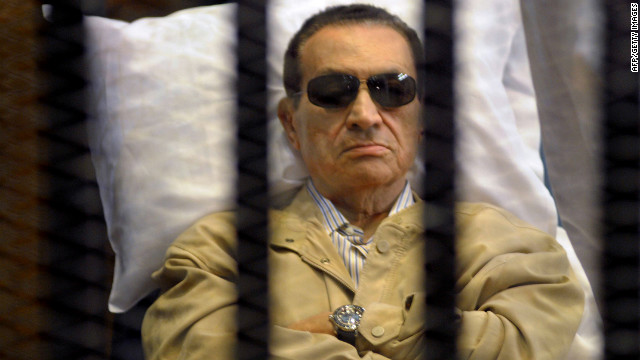


The ousted leader lies in a medical bed inside a cage in a courtroom during his verdict hearing in Cairo on June 2, 2012. A judge sentenced Mubarak to life in prison for his role in ordering the killing of protesters in the 2011 uprisings.The ousted leader lies in a medical bed inside a cage in a courtroom during his verdict hearing in Cairo on June 2, 2012. A judge sentenced Mubarak to life in prison for his role in ordering the killing of protesters in the 2011 uprisings.
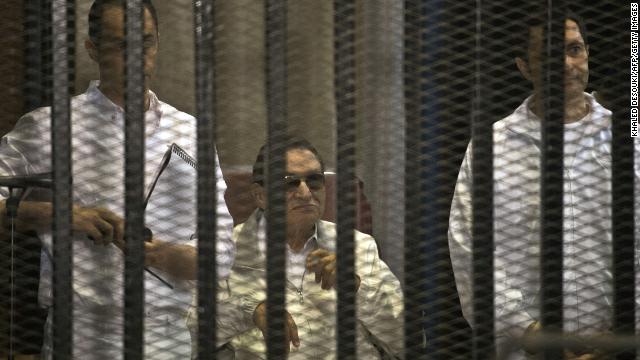


Mubarak and his sons Gamal, left, and Alaa are seen behind the defendants' cage during their retrial at the Police Academy in Cairo. Mubarak was granted a retrial. Later, a court ordered Mubarak be freed, pending his retrial.Mubarak and his sons Gamal, left, and Alaa are seen behind the defendants' cage during their retrial at the Police Academy in Cairo. Mubarak was granted a retrial. Later, a court ordered Mubarak be freed, pending his retrial.


Mubarak through the years

Mubarak through the years

Mubarak through the years

Mubarak through the years

Mubarak through the years

Mubarak through the years

Mubarak through the years

Mubarak through the years

Mubarak through the years

Mubarak through the years

Mubarak through the years

Mubarak through the years

Mubarak through the years

Mubarak through the years

Mubarak through the years


1


2


3


4


5


6


7


8


9


10


11


12


13


14


15


Photos: Mubarak through the yearsPhotos: Mubarak through the years


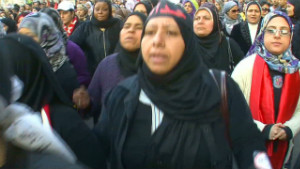
Egypt: Women after the revolution

Later, he told the country's Sada ElBalad TV station in a brief phone interview that he "didn't commit anything."


"I laughed when I heard the first verdict," he said of the first trial, which he appealed. "When it came to the second verdict, I said I was waiting. It would go either way. It wouldn't have made a difference to me either way."


Prosecutor-General Hisham Barakat will appeal the verdict, Egypt's government-controlled Al-Ahram newspaper website reported Sunday.


Also acquitted Saturday were Mubarak's former Interior Minister Habib el-Adly and six of el-Adly's aides, who'd been accused of being connected to the deaths of 239 protesters as security forces cracked down on them in 2011. Mubarak's two sons also were acquitted Saturday of corruption.


Mubarak is still serving a three-year sentence for a previous conviction for embezzlement handed down in May, but it's not clear when he will be released because he is expected to be credited for time already served.


CNN's efforts to reach Mubarak's lawyer Farid El-Deeb for comment weren't immediately successful.


Both sides have alleged that Mubarak's trials have been politicized, with supporters arguing he was unfairly vilified and opponents fearing that he'd be acquitted as memories of the revolution faded.


His legal fortunes did seem to parallel the political climate -- just last year, Mohamed Morsy, the Islamist who became Egypt's first democratically elected president, supported a retrial with the backing of his supporters, who argued Mubarak should have received a death sentence rather than life in captivity.


But Morsy himself was deposed by the military in July 2013, as opponents accused him of pursuing an Islamist agenda at the exclusion of other factions.


And now the Arab Spring revolt that ousted Mubarak has come nearly full circle -- Mubarak appears close to freedom; Morsy is jailed, his Muslim Brotherhood banned; and Morsy supporters allege the current government has returned to Mubarak's authoritarian practices.


Explaining the verdict


Judge Mahmoud el-Rashidy said he dropped charges against Mubarak because Cairo Criminal Court didn't have the jurisdiction to try him for the protesters' deaths.


The judge said the case that prosecutors initially referred to the court listed only el-Adly and his aides as defendants -- not Mubarak himself.


But after mass protests pressured the prosecutor general to question Mubarak, a second referral was made to the court, and the two cases were merged into one.


Lawyer Hoda Nasralla, who represents the families of 65 slain and injured protesters, said the inclusion of Mubarak in a second referral should have trumped his exclusion in the first.


"The judge shied away from directly acquitting Mubarak even though he was accused of conspiring with Adly, and Adly was acquitted," she said. "The judge resorted to formalities instead."


'I want only God's retribution'


Salway El-Sayed, mother of one of the slain 2011 protesters, sat down on a sidewalk outside the court after she heard Saturday's verdicts, praying to God to deliver justice.


She broke down in tears, her hands shaking, as she recalled her son Tamer Hanafy, who was killed in January 2011 at Cairo's Tahrir Square -- the epicenter of the uprising.


"I'm worried my son's blood would go in vain," she said. "Our children's blood isn't cheap. Their blood is precious, like any other blood."


"I don't want execution," she continued. "This won't bring back my son ... I want only God's retribution. Nothing more."


Tahrir Square was closed to traffic following Saturday's verdicts.


One man was killed and nine people were injured as several hundred demonstrators clashed nearby with Egyptian security forces, Egyptian Ministry of Health spokesman Hossam Abdel Ghaffar told CNN.


Police fired tear gas and bird shot at the protesters. The Ministry of Interior said police were pelted by rocks before the incident escalated.


The human rights group Egyptian Initiative for Personal Rights, whose lawyers represented more than 60 civil plaintiffs in the case, said that Saturday's verdict solidified the impunity that it says security forces and their leaders enjoy.


"Justice was dealt another severe blow," the group said in a news release.


How it started


In January 2011, throngs of Egyptians filled the streets of Cairo to decry the country's poverty, unemployment and repression. Protesters called for Mubarak to step down but were met by a fierce and often violent government crackdown. Mubarak eventually stepped down in February 2011.


That freed up long-supressed Islamist movements, including the Muslim Brotherhood, to run for office. Morsy, backed by the Brotherhood's Freedom and Justice Party, became president in June 2012.


But Morsy was ousted in a coup about a year later amid widespread protests against his rule. Since then, Cairo's military-installed government has banned the Brotherhood, calling it a terrorist group -- an allegation it denies -- and accusing it of being behind a wave of deadly attacks on police and the military.


Many Islamist and secular activists have been arrested and given lengthy sentences. A restrictive protest law and repeated deadly crackdowns on demonstrations followed.


Abdel Fattah el-Sisi, the general who led Morsy's ouster, was elected president in May after leaving the military to run for the office.


Since Mubarak stepped down in February 2011, the ailing former ruler has appeared in court numerous times on a variety of charges, often wheeled in on a gurney. His lawyers say he suffered health problems after his 2011 arrest, including a stroke, and he has served much of his prison time at a military medical facility.


In May, when a Cairo court sentenced Mubarak to three years in prison for embezzlement, his sons Gamal and Alaa were sentenced to four years each on the same charge.


All three were convicted of embezzling $18 million that was allocated for the renovation of presidential palaces. The Mubaraks have insisted they are not guilty.


Journalist Sarah Sirgany reported from Cairo; CNN's Jason Hanna and Holly Yan reported and wrote from Atlanta. CNN's Ian Lee and Yousuf Basil contributed to this report.


Correction: Ebola-Omaha Patient-Memorial story

africatodayonline.blogspot.com -

LANDOVER HILLS, Md. (AP) - In a story Nov. 29 about the funeral of a doctor who died of Ebola, The Associated Press reported erroneously the age of Dr. Martin Salia's younger son, Hinwaii. He is 12 years old, not 14.


A corrected version of the story is below:


Doctor who died of Ebola hailed as hero


Doctor who died of Ebola remembered at funeral as national hero in Sierra Leone


By BEN NUCKOLS


Associated Press


LANDOVER HILLS, Md. (AP) - Dr. Martin Salia didn't get into the medical profession to get rich, and even though he was a permanent U.S. resident, he chose to work in his native Sierra Leone because the need for surgeons there was so great.


Although his medical colleagues were worried when he returned there to treat Ebola patients, they said the decision was consistent with his character.


The 44-year-old surgeon was remembered Saturday at his funeral Mass as a tireless, selfless and heroic advocate for medical care for the less fortunate. Salia died of Ebola on Nov. 17 after being flown to a hospital in Omaha, Nebraska, in the advanced stages of the deadly virus. He became the second person to die in the United States after contracting Ebola in West Africa, where it has killed nearly 7,000 people.


Ron Klain, the White House Ebola response coordinator, read a personal note of condolence from President Barack Obama to Salia's family.


"The greatest heroes are people who choose to face danger, who voluntarily put themselves at risk to help others," Klain said. "Martin Salia was such a man."


The 90-minute Mass at the home parish of Salia's family in Maryland drew a crowd that swelled to the hundreds. Relatives, friends, colleagues and dignitaries from both the U.S. and Sierra Leone were in attendance, along with Sierra Leonean immigrants from around the country, some of whom said they didn't know Salia personally.


Salia's wife, Isatu Salia, wept as she carried a small black box containing her husband's cremated remains into the church, flanked by the couple's sons, 20-year-old Maada and 12-year-old Hinwaii.


Bockari Stevens, the Sierra Leonean ambassador to the United States, called Salia a national hero who abandoned "the luxuries of the United States" to aid his homeland.


"It is a loss not only to your family. It is a loss to our country," Stevens said.


Stevens called for the United States to do more to "ensure that this scourge is blighted" in Sierra Leone, which is now bearing the brunt of the 8-month-old outbreak, and the other West African nations stricken by Ebola. Klain pledged that more aid was on the way.


"The world's response has been too late, but now, help is coming," he said to applause.


The top United Nations official in the fight against the disease said Saturday in an interview with The Associated Press that Sierra Leone will soon see a dramatic increase in Ebola treatment beds, but it's not clear who will staff them. Only about a quarter of a promised 1,200 treatment beds are up and running. The nation is also dogged by unsafe burials, which may account for up to 50 percent of all new cases, said Anthony Banbury, head of the U.N. Mission for Ebola Emergency Response.


Salia was born and raised in Kenema, Sierra Leone, and received his medical training in Freetown, the country's capital. He later served as a surgical resident in Cameroon and also worked in Kenya and the United States. His dream had been to open his own hospital in Sierra Leone, colleagues said.


Salia did not receive aggressive treatment for Ebola until nearly two weeks after he first started showing symptoms. His formal diagnosis was delayed, and it took several days for him to be flown back to the United States. Those delays, doctors said, probably made it impossible for anyone to save his life.


Dr. Marilee Cole, an international health consultant who ran a Georgetown University training program in Cameroon, remembered Salia as an unusually humble physician. The diminutive, wiry surgeon was always in motion, she said, and despite his work ethic, he managed to organize a soccer league for the hospital staff. After he completed his residency and began training other doctors, they were awed by his multitude of skills, she said.


"You never knew how hard he was working until you talked to your colleagues," Cole said. "Over the course of many years, I came to understand there was something special about him."


In a brief interview after the Mass, Salia's older son said he was heartened by the esteem in which others held his father.


"I'm really proud that he was able to do so many things for a lot of people," Maada Salia said.


___


Associated Press writer Sarah DiLorenzo in Dakar, Senegal, contributed to this report.


___


Follow Ben Nuckols on Twitter at http://ift.tt/13qvZwN.


Copyright 2014 The Associated Press. All rights reserved. This material may not be published, broadcast, rewritten or redistributed.


Nigeria: Death Toll in Kano Blast Rises to 89

africatodayonline.blogspot.com -

The death toll of the multiple bomb blasts that rocked Kano Central Mosque on Friday has risen to 89, Daily Trust learnt.


Sources from hospitals told our correspondent that 78 corpses were deposited at the Murtala Muhammed Hospital and 11 at the Nasarawa hospital.


The number of injured are now put at 107 with 51 at the Murtala Muhammed Hospital and 56 at the Nasarawa hospital.


Daily Trust further gathered that some casualties were taken to the Airforce hospital but could not ascertain the figures.


The blasts happened at the Grand Mosque in Kano, the biggest city in the Muslimnorth of the country, just as Friday prayers had got under way at about 2:00 pm (1300 GMT).


Copyright © 2014 Daily Trust. All rights reserved. Distributed by AllAfrica Global Media (allAfrica.com). To contact the copyright holder directly for corrections — or for permission to republish or make other authorized use of this material, click here.


AllAfrica publishes around 2,000 reports a day from more than 130 news organizations and over 200 other institutions and individuals, representing a diversity of positions on every topic. We publish news and views ranging from vigorous opponents of governments to government publications and spokespersons. Publishers named above each report are responsible for their own content, which AllAfrica does not have the legal right to edit or correct.


Articles and commentaries that identify allAfrica.com as the publisher are produced or commissioned by AllAfrica. To address comments or complaints, please Contact us.


Uganda: Uganda Leads Spain in Tourism Poll

africatodayonline.blogspot.com -

Uganda is leading Spain by a wide percentage in an ongoing online opinion poll over which of the two countries is a favourite destination for tourists.


By Saturday, the poll conducted on the Guardian, UK's website, Uganda had polled 79 per cent against Spain's 21 per cent.


The poll was prompted after President Yoweri Museveni hinted on the fact that Uganda was better than most European countries, including Spain, in what it offered to tourists.


"The biggest problem with tourism is poor promotion," Museveni said. "In Europe, people go to the Mediterranean coast. I visited Spain; it is very hot and humid in summer. I think Uganda would be a better destination than some of those destinations."


Museveni said Uganda was a "good place on the globe where you go and have a nice life."


It is not the first time that Spain and Uganda have taunted each other. In 2012, Spanish Prime Minister Mariano Rajoy kicked off a storm when he sent a text message to his finance minister, compelling him to stand firm in the quest of better terms amidst the bailout package negotiations, reminding him that


"We're the number four power in Europe. Spain is not Uganda."


The remark left many Ugandans incensed, with some saying that Uganda enjoyed better Gross Domestic Growth figures than Spain.


Last week, the Guardian's website decided to put the contest to travellers, asking a simple question:


"Uganda or Spain: where would you prefer to go on holiday?"


Many people who commented on the poll said while Uganda was a good destination, its stance against gays had tainted the country's image.


"I'd probably go to Uganda if they changed their policies toward LGBT people," said one of the readers.


In 2012, a reputable online tour magazine, Lonely Planet, ranked Uganda number one among the top ten countries to visit.


The journal said: "After all, this is the source of the river Nile - that mythical place explorers sought since Roman times. It's also where savannah meets the vast lakes of East Africa, and where snow-capped mountains bear down on sprawling jungles."


However, it also warned tourists of the country that is 'so homophobic' and that it had tough laws against gays.


Last year, tourism became Uganda's biggest export earner after it fetched $1.4bn in financial year 2013/2014, up from $1.1bn the year before, according to Bank of Uganda. The sector surpassed diaspora remittances and coffee.


Zimbabwe: What Happened to Tsvangirai's Party?

africatodayonline.blogspot.com -

analysis


Morgan Tsvangirai should take the blame for the collapse of Zimbabwe's major opposition party.


The Movement for Democratic Change (MDC), Zimbabwe's largest opposition party, is at its lowest ebb since its formation in 1999. Split into factions and plagued with infighting, it poses no threat to the ruling Zimbabwe African National Union-Patriotic Front (Zanu-PF) or its leader Robert Mugabe, in office since 1980. MDC boss Morgan Tsvangirai--once a darling of the masses at home and a figure of hope abroad--is a shadow of the man who just six years ago seemed poised to topple Mr Mugabe.


High-level defections hit the MDC in March, when several key officials broke away to form the MDC Renewal Team. Among them were Tendai Biti, the country's former finance minister and MDC secretary-general; and Elton Mangoma, the former energy minister and MDC treasurer-general.


"Mr Tsvangirai is in the same league of wartime veterans such as Mr Mugabe and he must now go," Mr Biti told Africa in Fact. "He has played his part and he must now leave it for the next generation."


Mr Tsvangirai's attempts to court back the defectors have so far fallen on deaf ears. The MDC Renewal Team, and a smaller MDC faction led by Welshman Ncube, a lawyer and former MDC secretary-general, have spurned his efforts at dialogue. Mr Tsvangirai finds himself isolated and his former political force is a fading memory.


Mr Tsvangirai built his reputation in the 1990s as secretary-general of the Zimbabwe Congress of Trade Unions. As a labour leader he pressed Mr Mugabe's government to improve workers' conditions and living standards. Mr Tsvangirai moved into full-time politics in 1999 when he became the MDC leader.


At the time he also enjoyed popular support from civil society organisations, white commercial farmers and students. The violent farm invasions in 2000 were a boon for the opposition leader. He spoke out strongly against the invasions, casting himself as a champion of liberal democracy. He had the international community eating out of his hand.


The pinnacle of his rise came during the dramatic March 2008 presidential elections. In the first round of voting, Mr Tsvangirai won more votes than Mr Mugabe, 47.9% to 43.2%, just short of the 50% or more necessary to prevent a second round of voting.


Political violence escalated leading up to the run-off, with Zanu-PF militias killing nearly 300 MDC supporters, according to a 2008 report from Human Rights Watch, a New York-based watchdog. Five days before the poll, Mr Tsvangirai pulled out of the contest on the grounds that his participation would result in more of his supporters dying.


Since then, Mr Tsvangirai and the MDC have slid downhill. The descent culminated in the 2013 poll, which was deemed free and fair by the African Union and the Southern African Development Community. Mr Mugabe handed the MDC a resounding defeat, winning 61% of the vote to the MDC's 33%. What happened between these two very different sets of elections?


Mr Tsvangirai blamed electoral misconduct for his party's loss in the 2013 poll. "We had judged that our sheer numbers were going to overwhelm the electoral mischief Zanu-PF had planned," he wrote in his memoir, "Personal Reflections", released in July. "[But] we underestimated the level of subversion of the people's will that had been planned." After its defeat, the MDC claimed it had compiled a dossier detailing the fraud, but it did not make it public nor submit it to election observers.


For many disgruntled party officials, this response hints at a serious character flaw: a refusal to own up to the electoral loss. "The leader takes responsibility and the blame that comes with it," the MDC Renewal Team's Mr Mangoma said.


His former boss "tarnished the MDC brand and brought the party into disrepute" after media revelations in 2012 of extra-marital affairs, Mr Mangoma said.


Popular frustration with Mr Tsvangirai grew during the rule of the government of national unity, formed in February 2009 after the previous year's electoral impasse. Mr Tsvangirai served as prime minister but played a subservient role to Mr Mugabe. Mr Mugabe kept key ministries--military, police, foreign affairs, mining and media--for Zanu-PF, leaving less powerful ministries such as health and education to the MDC. During Mr Mugabe's absence on foreign trips, Mr Tsvangirai played second fiddle to Mr Mugabe's deputy president, Joice Mujuru.


Compounding this humiliation is Mr Tsvangirai's loss of grassroots support. His original support base criticise him for enjoying the perks of power while not doing enough to push for political reforms. During the unity government, Mr Tsvangirai moved into a $5m mansion in the posh Highlands suburb in Harare, which he still occupies more than a year after his 2013 defeat.


Since the end of the unity government, Mr Tsvangirai has failed to articulate clear programmes to voters, said Phillan Zamchiya, the former regional co-ordinator of the Crisis in Zimbabwe Coalition and a research fellow at Oxford University.


Mr Tsvangirai misread the popular mood by failing to tackle issues Mr Mugabe made paramount during his rule, Mr Zamchiya said. "Throughout the [2013] campaign, Tsvangirai was conspicuous for largely neglecting the topics of indigenisation, sanctions and the legacy of the liberation war, all of which were central to Zanu-PF's campaign," he said. Mr Tsvangirai mistakenly "thought Zimbabweans were more concerned with day-to-day, bread-and-butter issues", he said.


"In the end, Mr Mugabe... presented himself as the custodian of the revolutionary past [and] depicted Mr Tsvangirai as being without history and so... without the credibility to lead Zimbabwe," Mr Zamchiya said.


With the MDC split, political observers claim that only a united opposition could challenge Zanu-PF at the next election in 2018. "I do not see how a fragmented opposition is going to stop the ruling party from retaining power--unless Zanu-PF were to implode before the next election, which can only happen after Mr Mugabe's death or incapacitation," said Charles Mangongera, a political analyst based in Harare.


The problem is that opposition party leaders are wary of any alliance with Mr Tsvangirai, who has made it known that he is keen to lead such a coalition. At a Harare press conference in April, Mr Tsvangirai asked former members to join him under a "big tent".


The MDC fissures and the disarray of the opposition is a godsend for Mr Mugabe. Zanu-PF has its own internal problems linked to the appointment of a successor to the 90-year-old president. Party members will vote for a new leader at Zanu-PF's elective congress, which will be held in December 2014, after this magazine went to press.


Mr Tsvangirai was re-elected to another five-year term as party leader at the MDC's congress in late October. The party created a "champion of democracy" in 1999. Now a tainted campaigner long past his prime is holding the MDC hostage.


Ray Ndlovu, a journalist based in Zimbabwe, writes for the Financial Gazette, the country’s largest business weekly. He also writes for South Africa’s Business Day, Mail & Guardian, City Press and Sunday Times publications. He holds a BSc honours degree in journalism and media studies from the National University of Science and Technology in Bulawayo, Zimbabwe.


Kenya: KNUT Dismisses Letter By National Treasury

africatodayonline.blogspot.com -

Nairobi — The Kenya National Union of Teachers (KNUT) has termed a letter by the National Treasury Cabinet Secretary Henry Rotich that ruled out a pay hike for teachers before June as inconsequential.


Speaking to Capital FM News, Secretary General Wilson Sossion indicated that an agreement of the basic salary was an important component of a collective bargaining agreement which was the main topic of discussion in the ongoing negotiations.


He pointed out that the announcement by the CS was in total contradiction of the ongoing salary negotiations and pointed out that the unions and the Teachers Service Commission (TSC) had resolved that the matter of allowances be shelved until discussions on basic pay are complete.


"We are not dealing with the National Treasury. As you know, one cannot convene a CBA without putting an offer on the table. You cannot have a collective bargaining agreement without basic salary being a component of discussions," he said.


His sentiments were echoed by KNUT's National Chairman Mudzo Nzili who stated that teachers will not relent in pressing for what was due to them.


"We shall continue pressing on and we shall not relent. Remember, we have not demanded that our money be given to us this month. That is a misconception by the government. What we want is a commitment that at some point in time, we will be given our dues," he stated.


The two unions have had six meetings at the Teachers Service Commission (TSC) headquarters, but the teachers' employer has not made any counter-offers to the demands by the unions which now want an increase of around 150 percent, down from 300 percent.


KNUT and Kenya Union of Post Primary Education Teachers (KUPPET also want commuter allowances for teachers to match those earned by civil servants at 10 percent of teachers' basic pay.


The unions also came down from their push for responsibility allowances by some five percentage points.


The Government withdrew a Sh50 billion offer tabled after protests by the Salaries and Remuneration Commission.


Copyright © 2014 Capital FM. All rights reserved. Distributed by AllAfrica Global Media (allAfrica.com). To contact the copyright holder directly for corrections — or for permission to republish or make other authorized use of this material, click here.


AllAfrica publishes around 2,000 reports a day from more than 130 news organizations and over 200 other institutions and individuals, representing a diversity of positions on every topic. We publish news and views ranging from vigorous opponents of governments to government publications and spokespersons. Publishers named above each report are responsible for their own content, which AllAfrica does not have the legal right to edit or correct.


Articles and commentaries that identify allAfrica.com as the publisher are produced or commissioned by AllAfrica. To address comments or complaints, please Contact us.